
IBM Software Series
Finding Simplicity in Complexity
Creating Value Through Transformation
When digital transformation becomes a business imperative, IBM Software brings a century of innovation to build comprehensive, intelligent solutions for the modern enterprise. We believe true technology value lies not in the tools themselves, but in how we turn complexity into clarity and challenges into opportunities.
IBM Software Series — More than software. Your transformation partner for the journey ahead.
Let’s build something extraordinary. Technology with purpose. Business with impact.

Core Capabilities
Smarter business. Real impact.
Enterprise technology – Stay connected
IBM Solutions in Digital Transformation
Founded in Hong Kong in 2024, HKIT delivers enterprise-grade technology solutions with deep expertise drawn from industry-leading platforms — serving clients across financial services, government, healthcare, manufacturing, and more. Local responsiveness. Regional coverage. Global-grade solutions.
watsonx AI & Business Intelligence
Unlock the full potential of your data with enterprise-grade generative AI. Move from gut-driven decisions to precision-powered predictions, spotting opportunities before the competition in rapidly shifting markets.
Data Infrastructure Management
From edge to cloud, unify and govern your distributed data ecosystem. Build an agile, compliant, cost-efficient modern data foundation ready for the AI era.
IT Monitoring & AIOps Automation
Shift from firefighting to foresight with intelligent operations. Boost system resilience and free your IT teams to drive business innovation instead of maintaining status quo.
Business Process Automation
Connect people, data, and workflows through intelligent automation. Eliminate bottlenecks, streamline operations, and redirect human talent toward strategic, high-value work.
Application Modernization
Bridge legacy systems to cloud-native futures. Refactor, replatform, and accelerate delivery cycles—preserving core value while embracing tomorrow’s agility.
Enterprise Security Solutions
In an era of escalating threats, our zero-trust architecture and AI-powered defenses protect your most valuable digital assets, letting you innovate without compromise.
Enterprise Sustainability & Green Innovation
Embed ESG commitments into your technology DNA. Through smart energy management and carbon footprint tracking, deliver business value while honoring your responsibility to the planet and society.
Platform Solutions – IBM Software Series
More than software. Your transformation partner for the journey ahead. Let’s build something extraordinary. Technology with purpose. Business with impact.
Application Modernization
Meeting enterprise digital transformation needs, achieving seamless data integration between applications, systems, and services, and accelerating response to ever-changing business requirements
To accelerate digital transformation and achieve operational excellence, leading enterprises seek faster, more agile ways to evolve. Building dynamic, responsive business processes requires automated, secure, and reliable integration of data across disparate systems—whether via real-time APIs, files, or messaging. IBM Application Modernization delivers comprehensive, scalable integration capabilities that enable enterprises to rapidly adapt to ever-changing business demands.
Featured Software
IBM API Connect
IBM API Connect is an enterprise-grade, centralized API lifecycle management solution that delivers an intuitive experience for developers to build, manage, test, and secure API assets. It enables real-time API-based data integration and exchange, allowing internal applications and external partners to interact seamlessly and drive application modernization goals.
API Lifecycle Management Solution for Enterprises
APIs play a critical role in driving digital business and transformation, enabling seamless integration between applications and systems while reducing the technical challenges of real-time data exchange across heterogeneous systems. As API usage increases, enterprises face challenges in managing APIs, because unknown APIs can become vulnerabilities in corporate security, exposing businesses to risks of malicious attacks or critical data breaches.
IBM API Connect is a comprehensive API lifecycle management solution that helps enterprises consistently design, manage, test, and secure API assets. It features an intuitive graphical development interface and AI-driven testing capabilities, allowing developers to immediately obtain API response results and thereby reduce errors that may only be discovered after API deployment. Additionally, through the IBM DataPower Gateway, it provides a secure entry gateway for API services, effectively implementing security protection and usage tracking to ensure that enterprise API assets are effectively and rigorously managed.
Key Features
Easily and quickly create, optimize, and scale APIs
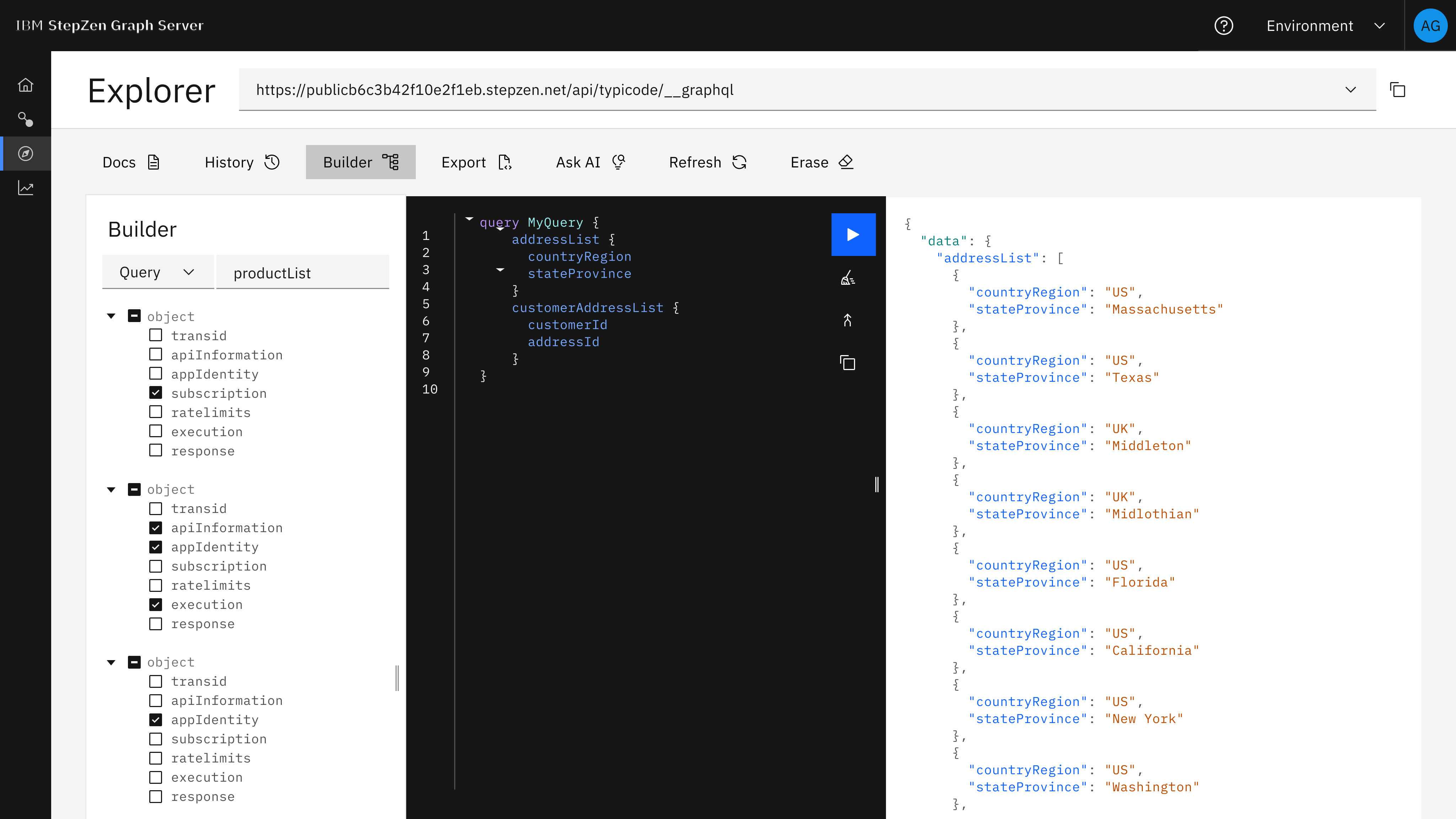
IBM API Connect allows developers to easily create and deploy enterprise-grade API services in minutes, automatically generating secure and optimized APIs by simply providing connection information for data sources. It can also combine data from multiple sources, such as SQL, NoSQL, REST, SOAP, and other APIs. Additionally, through built-in web-based dashboard functionality, developers can quickly perform API testing, management, and monitoring tasks.
Ensure API security through a unified gateway
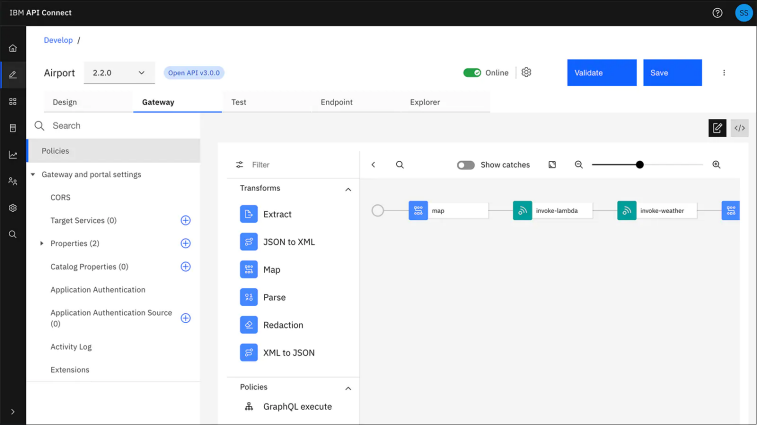
IBM API Connect provides a comprehensive management strategy for API access security, traffic management, mediation, acceleration, and support for non-HTTP protocols through the unified security gateway service offered by IBM DataPower Gateway. This gateway service uses a highly optimized and secure transport-level connection layer to manage API external connections, and provides enhanced security for API access through authentication methods such as OAuth 2.0, OpenID Connect, JSON Web Token (JWT), or third-party service-provided credentials.
Graphical API management interface optimizes governance capabilities
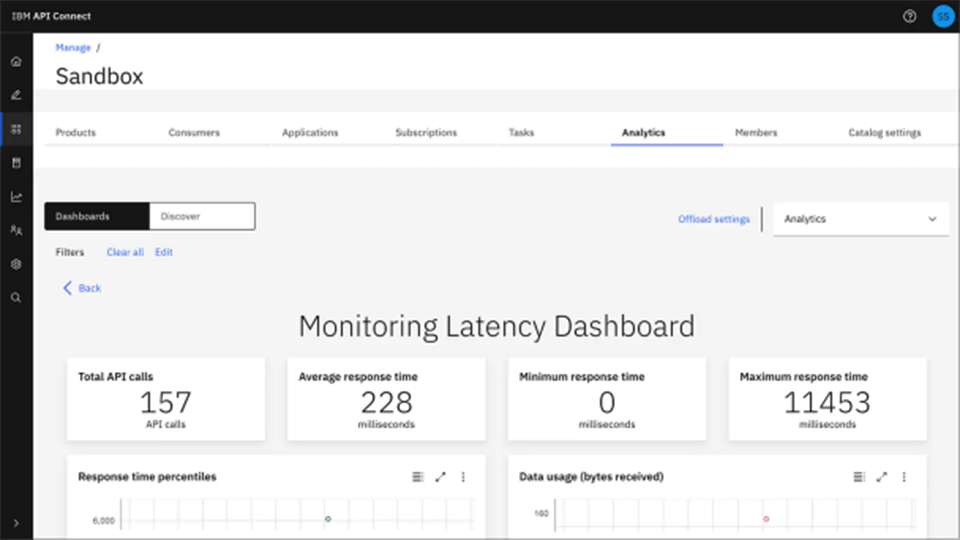
The built-in API management interface in IBM API Connect can effectively organize, publish, and analyze all states in the API lifecycle. It can configure different resource quotas for each API service, establish isolated environments for internal development teams and external users, and create refined access permission roles for users. Additionally, through out-of-the-box dashboards, custom analysis views can be created to filter, sort, and aggregate API data, providing a comprehensive understanding of API usage.
Excellent Enterprise API Lifecycle Management Service
IBM API Connect’s comprehensive solution supports every stage of the enterprise API asset management process, enabling businesses to effectively develop, deploy, and maintain API assets throughout their entire lifecycle.
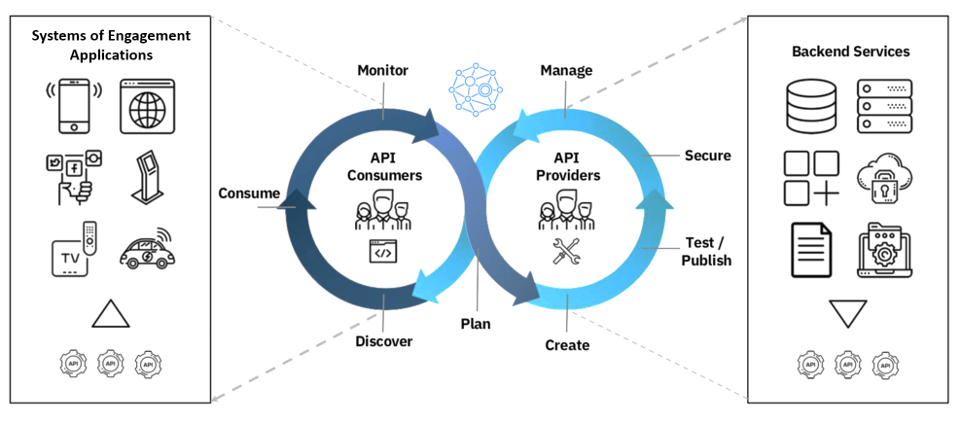
- Creating APIs: Supports rapid development and testing of REST (OpenAPI v2 & v3), SOAP (WSDL), GraphQL, and WebSocket APIs, making it easy to achieve automation.
- Managing APIs: Supports API packaging for different usage requirements and provides API governance, version control, service subscription, and community management functions.
- Protect APIs: Supports OAuth, OpenID Connect, and third-party authentication services to protect, control, and coordinate access to APIs, and effectively secure external endpoints through enterprise-grade API gateways.
- API Socialization: Supports self-service portals that enable application developers to easily find and use APIs, accelerating the scalability of API service usage.
Expected Benefits
Flexible and adaptable deployment
IBM API Connect supports the deployment of applications and data in various environments, including cloud environments, on-premises data centers, and hybrid cloud.
Highly secure
IBM API Connect uses a powerful enterprise-grade API gateway to manage network security risks and protect data across multi-cloud environments, giving you peace of mind.
Simple and intuitive operation
IBM API Connect’s simple and intuitive user experience has won international awards, and its excellent product performance ensures that developers can accelerate meeting corporate API development strategies throughout the API lifecycle.
Trusted architecture
With IBM API Connect’s microservices-based system architecture, you can meet enterprise SLA requirements simply by extending components on the backend, and can also manage and protect services for all endpoints more securely.
IBM App Connect Enterprise
IBM App Connect Enterprise is an industry-leading application and data integration solution featuring hundreds of built-in connectors and a no-code interface. Business users can easily build and deploy data mappings using APIs, event-driven architecture, and messaging without writing code, while powerful management dashboards ensure security and integrity across data, applications, and services.
Industry-Leading Enterprise Application System and Data Integration Solutions
In today’s mature IT landscape, enterprises rely on various applications for workflow automation, yet these systems often remain poorly integrated. For example, sales teams create customer data in Salesforce, generate quotes in Excel, then manually consolidate both into ERP systems for fulfillment—introducing errors, delays, and redundant work. IBM App Connect Enterprise automates these connections, replacing manual processes with simpler, more accurate, and efficient data integration. Its no-code interface and AI-assisted features accelerate service-oriented design, enabling rapid digital process transformation.
Key Features
No-code AI-guided experience accelerates process development
IBM App Connect Enterprise leverages hundreds of built-in AI-driven interfaces and design templates to accelerate application integration and process automation, enabling business users to create integration workflows through simple drag-and-drop in minutes. Its AI-powered data mapping assistant and transformation features simplify complex data conversions between heterogeneous systems using natural language.
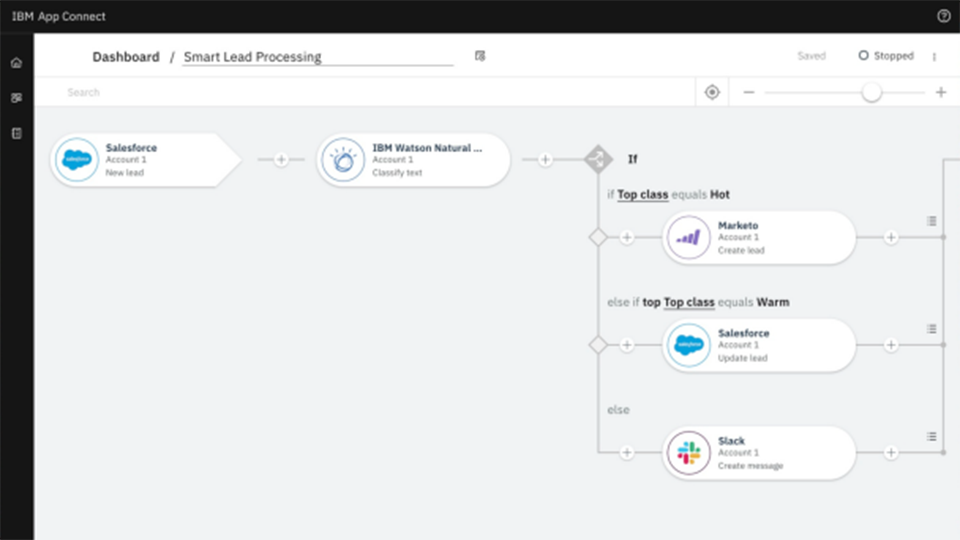
Supports event-triggered integration to achieve intelligent decision-making
IBM App Connect Enterprise supports event-triggered integration processes to detect specific states and respond to new or recurring events, such as immediate customer interactions on social media. It also utilizes polling mechanisms for non-event-driven architectures and applies conditional logic to simplify decision-making and adapt to evolving customer requirements.
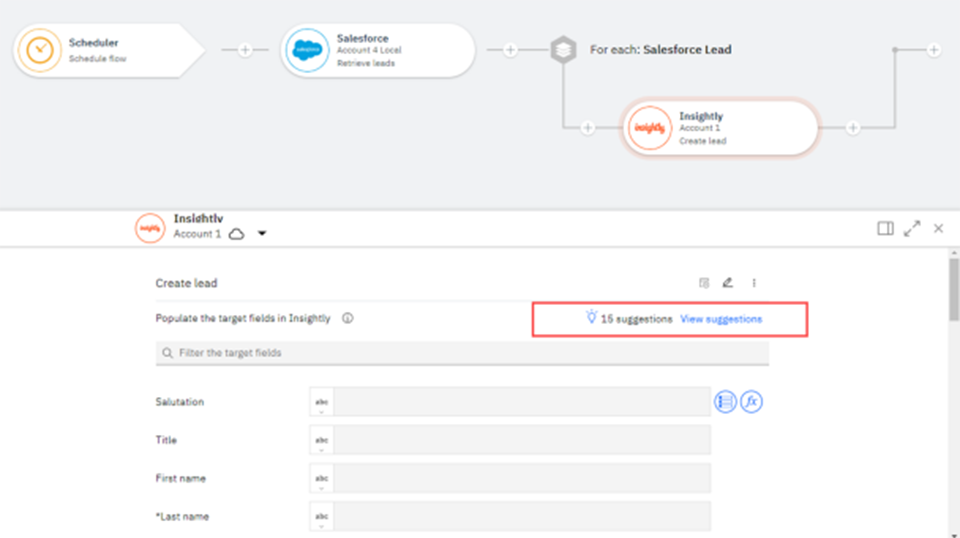
Based on API-driven integration to improve productivity
API-driven integration is a modern approach to integrating applications and data through reusable APIs. With the built-in tools in IBM App Connect Enterprise, API developers and business users can collaborate to create API services that securely access data, replacing overly complex point-to-point system integration methods to achieve a more flexible, scalable, and agile architecture.
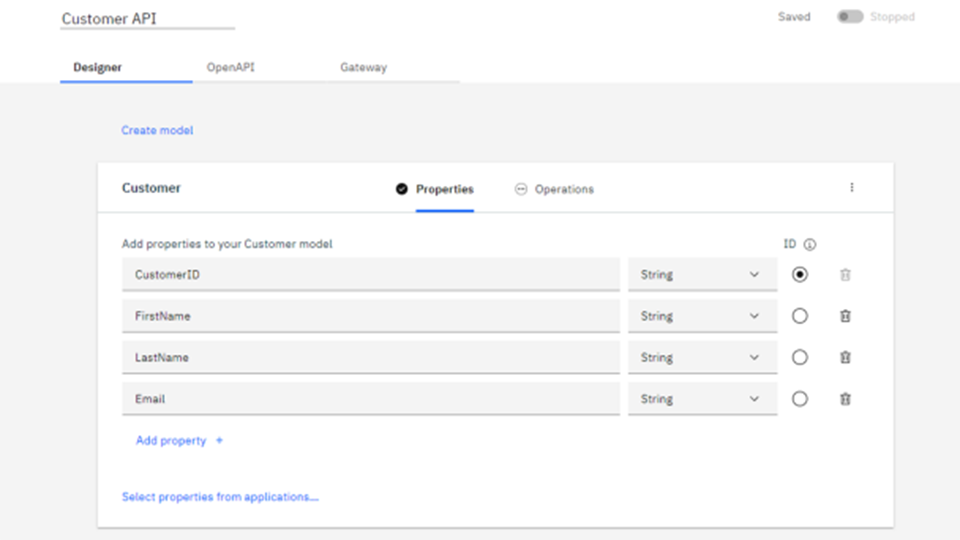
Highly customizable advanced code editing platform
Facing special and complex data exchange logic, IBM App Connect Enterprise provides an advanced code editing platform to meet the needs of enterprise-specific business process integration. It supports multiple types of data integration, including events, APIs, web services, synchronous/asynchronous processing, batch processing, and other technologies. At the same time, through AI-assisted design tools, it can easily map and convert various data exchange formats between applications, such as XML, JSON, CSV, EDIFACT, SWIFT, and other industry protocols.
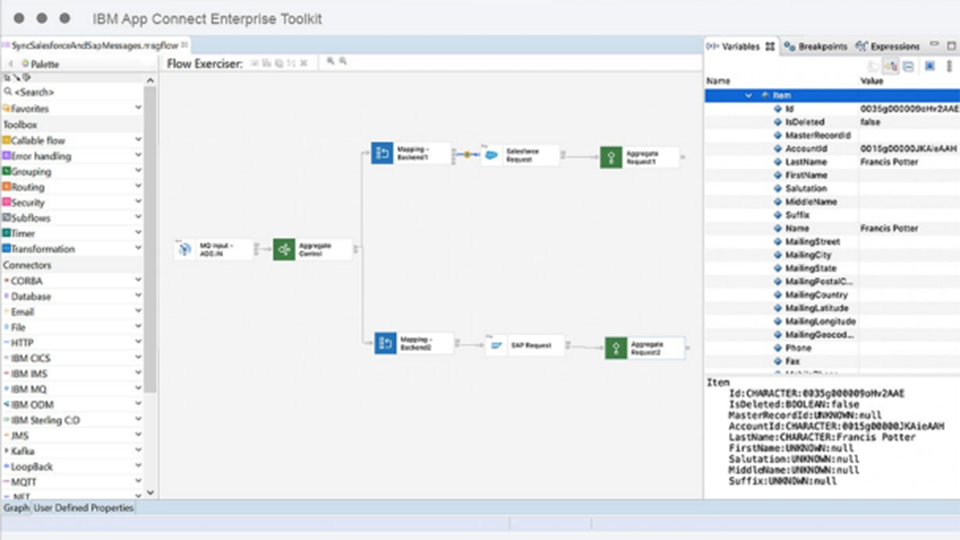
An enterprise connector with metadata awareness
IBM App Connect Enterprise includes the Enterprise Connector feature, which can easily connect enterprise applications and data, including SaaS applications, ERP, CRM, HRM, databases, and more. All connectors provide automatic metadata discovery, security, and session management, enhanced operations (such as updates and inserts), event triggers, batch and bulk data interaction functions, as well as support for error handling, development, and scalability management, all with enterprise-level performance.
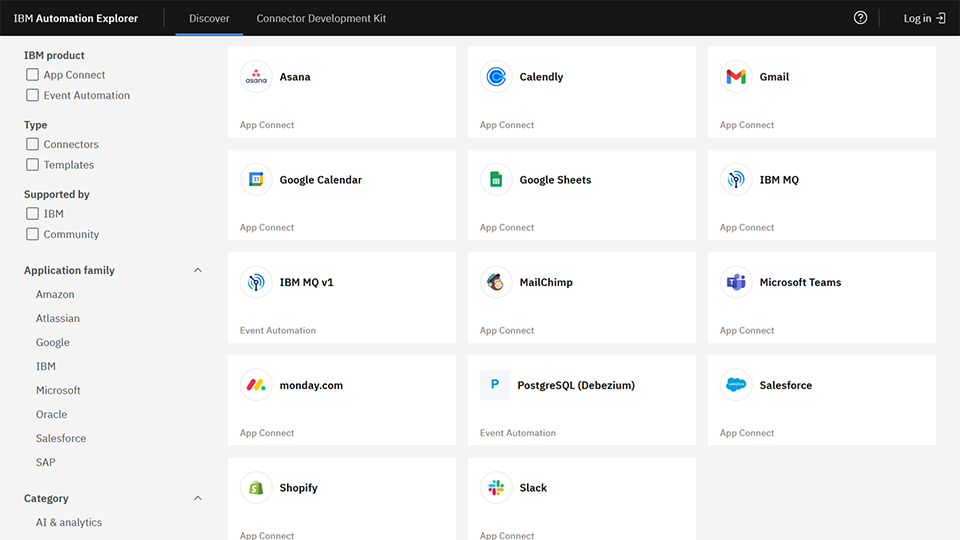
Meeting highly secure data integration between heterogeneous systems
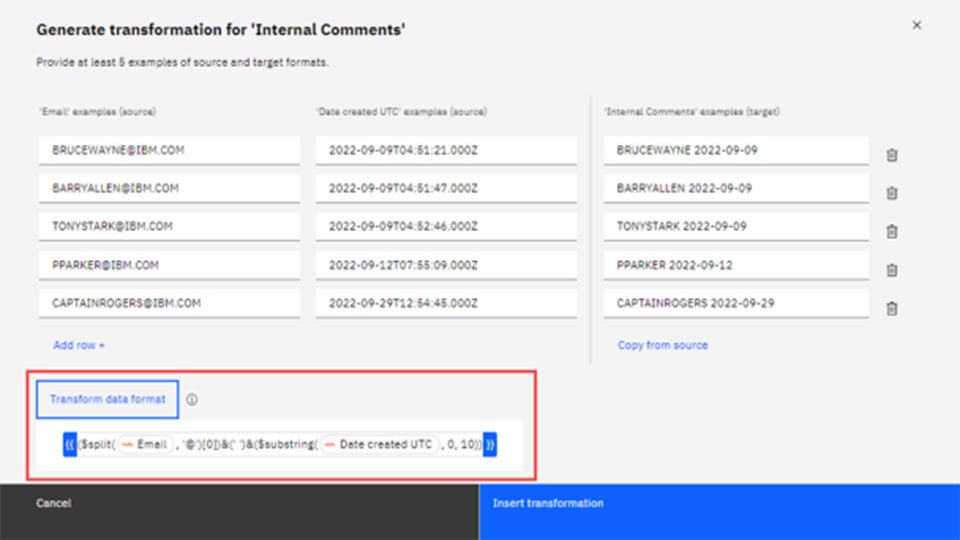
IBM App Connect Enterprise can help businesses quickly and securely connect and transform data between various applications, including data from different formats such as JSON, XML, CSV, XLS, as well as Batch, Bulk, Real-time data synchronization methods. Through unique features such as a spreadsheet-like UI interface, hundreds of built-in functions, and AI-driven data mapping suggestions, it accelerates businesses in achieving digital process automation and can derive the maximum value from business data.
Expected Benefits
Effectively enhance collaboration between business and technical users
Provide powerful no-code capabilities and an intuitive user interface for various types of users, enabling seamless real-time collaboration between business and technical users, jointly creating innovative data services for enterprises.
Easily manage and monitor the enterprise integration ecosystem
System administrators can easily manage application integration process states in hybrid cloud architectures through powerful management and dashboard tools, gaining maximum visibility into process performance and operational status.
Leveraging data integration to create maximum value for businesses
By utilizing the built-in AI-driven data transformation capabilities and hundreds of metadata-aware connectors and templates in IBM App Connect Enterprise, businesses can accelerate the realization of value brought by real-time data integration.
IBM MQ
IBM MQ is a high-performance, secure hybrid cloud messaging platform that uses message queue technology to send and receive data across diverse environments – from mainframes to mobile devices. Providing a single robust messaging backbone for dynamic heterogeneous infrastructures, it deploys across on-premises data centers, virtual environments, container platforms, and cloud resources while supporting multiple messaging interfaces including JMS, REST, .NET, AMQP, and MQTT.
Next-Generation Hybrid Cloud Messaging Platform for the Cognitive Era
In this fast-paced world, businesses aim to create new business value through digital transformation faster and more effectively without sacrificing reliability and security. Data is a critical asset for modern enterprises, and it must communicate between different applications, web services, and end devices to truly realize the value of digital process automation. To meet the needs of different information systems to exchange data at different times and speeds, businesses need to eliminate the complexity of application development through asynchronous messaging.
IBM MQ is a market-leading message transmission and data exchange solution based on queuing technology, suitable for businesses of all sizes and with over a quarter-century of successful experience in industries worldwide. This remarkable development history provides enterprises with proven reliability, maturity, and stability, setting it apart from other solutions. IBM MQ combines past success with continuous functional innovation to form a solution that supports daily business operations and enables sustainable growth and development.
Key Features
Provides web graphical management and monitoring tools
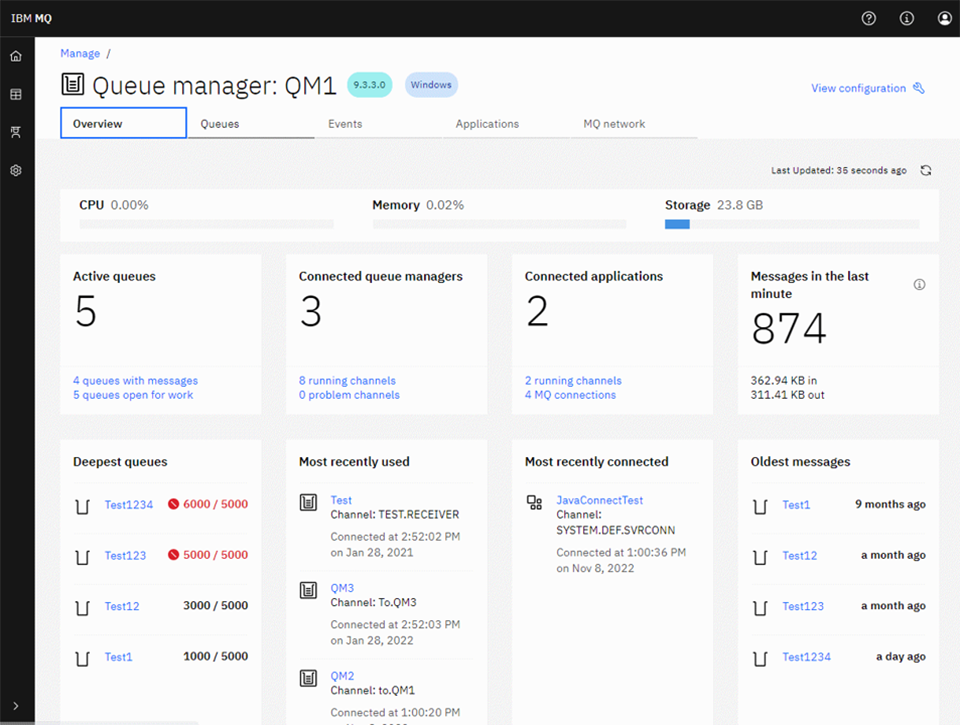
IBM MQ provides an integrated graphical user interface for management and monitoring, IBM MQ Console, which allows system administrators to monitor the operational status of all queue managers, stop or configure running queue managers, start or delete stopped queue managers, and also view the consumption status of queue managers for CPU, RAM, and storage resources through dashboards.
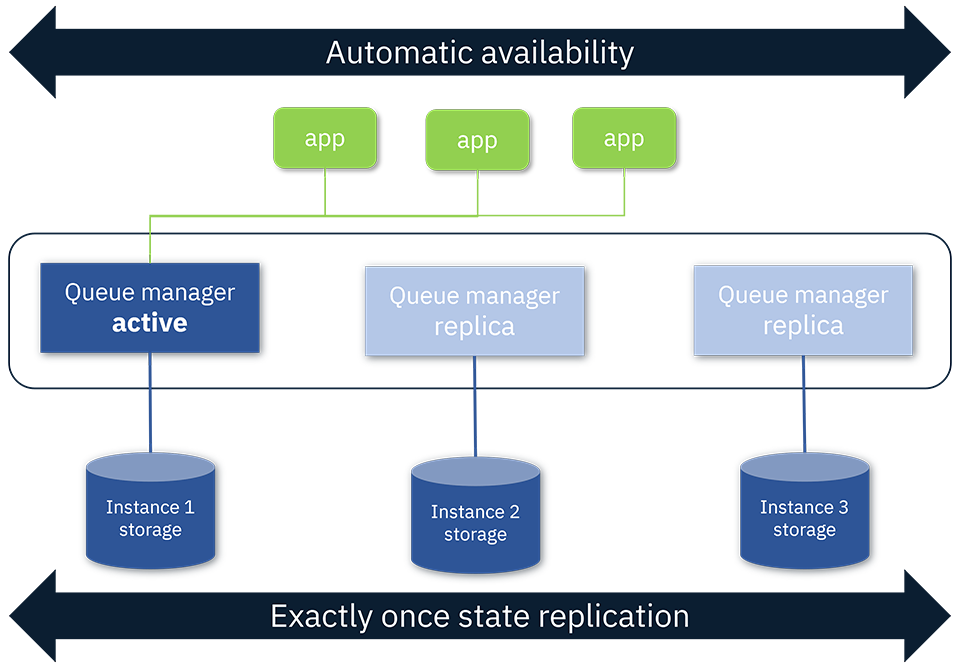
Support for multi-instance configuration to ensure high availability
IBM MQ supports multiple queue instance configurations, allowing queue instances to be deployed on multiple servers. If the server running the active instance fails, it will automatically switch to a standby instance of the same queue manager on a different server. When the standby instance becomes the active running queue manager instance, they will restart and take over subsequent work.
Support for message encryption to ensure transmission security
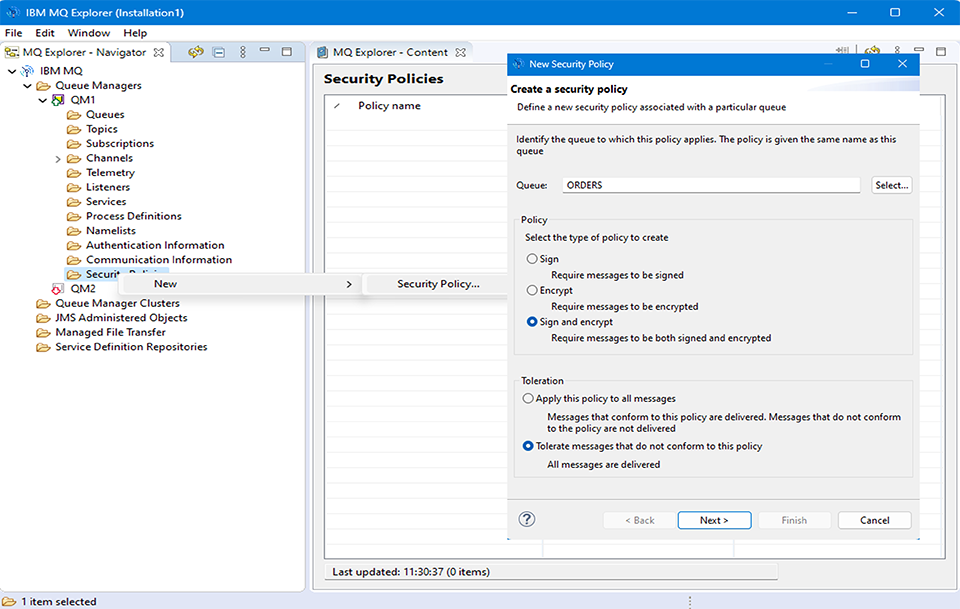
IBM MQ supports Advanced Message Security features, using public-key encryption algorithms to transmit sensitive corporate data through different levels of security controls. Administrators can specify encryption and signature algorithms by configuring security policies to encrypt and authenticate messages flowing through the queue, ensuring the security of message transmission.
Supports multiple asynchronous messaging methods
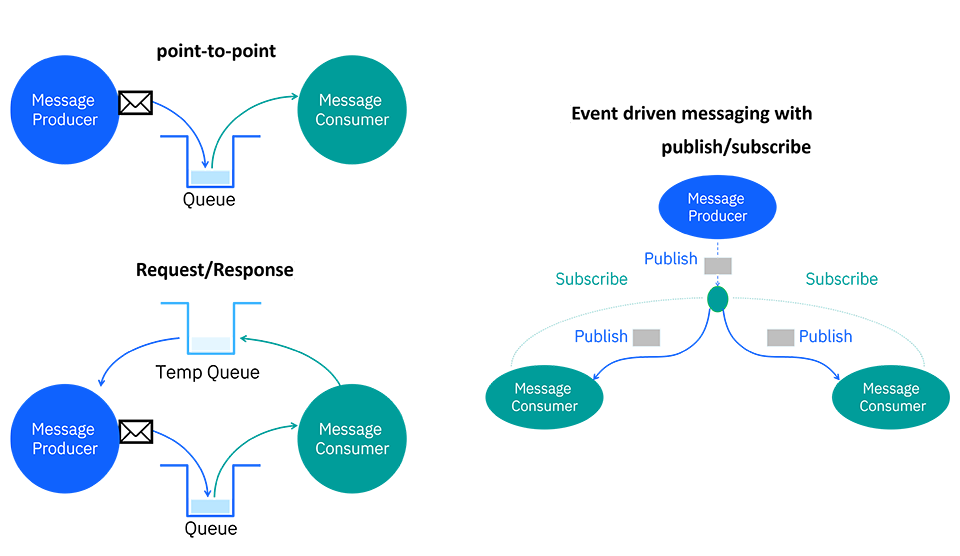
IBM MQ employs asynchronous messaging technology to ensure the reliability of message delivery, while supporting various transmission methods such as point-to-point (point-to-point), request/response, and event-driven subscription (event-driven messaging with publish/subscribe), meeting comprehensive enterprise needs.
- Point-to-point messaging: The sending side generates a message in a queue, and the receiving side retrieves the message from the queue asynchronously.
- Request/Response messaging: The sending side sends a message request from a temporary queue, the receiving side receives the request from the temporary queue and responds with a message to the message queue, and the sending side then retrieves the response message from the message queue.
- Event-driven subscription messaging: Applications (message producers) publish messages to a central location, and interested applications (message consumers) can subscribe to messages from that location. When new messages are published, each subscriber receives a copy.
Expected Benefits
Market leading position
Proven and highly trusted by top global enterprises, with 90% of the top 100 companies in Forbes Global Top 2000 being users of IBM MQ, it is evident that IBM MQ holds an unparalleled market leadership position.
Multi-deployment environment
Supports deployment in large host systems, open architecture servers, pre-configured hardware devices, Red Hat OpenShift container platform, cloud virtual servers, and other environments, meeting the critical message transmission needs of enterprises of different scales.
Ensures message delivery
Ensure one-time message delivery, guaranteeing that enterprise critical business data can be accurately and efficiently exchanged, by supporting multiple asynchronous message transmission methods to meet comprehensive enterprise needs.
IBM Aspera
IBM Aspera leverages the award-winning IBM FASP protocol to deliver fast file transfer and streaming technology, enabling high-speed data movement regardless of file size, distance, or network conditions. With breakthrough transfer speeds and secure private cloud capabilities, it meets global cross-regional and cross-border data transfer and synchronization needs at maximum velocity.
Enterprise High-Speed Large File Transfer Solution
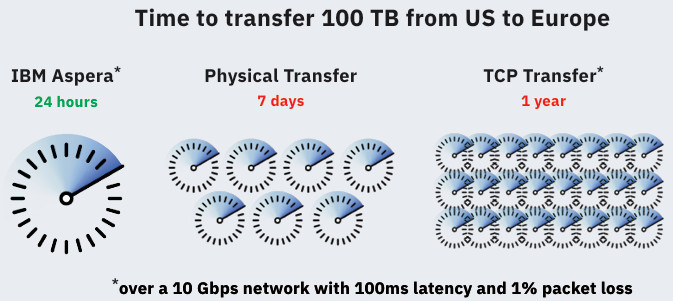
In this digital world, the fast and reliable movement of massive data across the globe has become critical for every multinational enterprise’s operations. However, the TCP protocol traditionally used for such data movement has inherent performance bottlenecks, particularly in cross-border network environments with high round-trip time (RTT) and significant packet loss.
IBM Aspera is an enterprise large-file high-speed transfer solution designed to provide file transfer services for multinational enterprises across global internet environments. Built on patented Aspera FASP transfer technology, it delivers unparalleled performance with maximum throughput unaffected by distance or network conditions. Its file transfer speeds are up to 100 times faster than traditional FTP, featuring end-to-end security and exceptional bandwidth control to provide enterprises with high-speed, reliable file transfer services.
Key Features
Accelerate global data synchronization
IBM Aspera Sync enables enterprises to rapidly and securely replicate and synchronize large files globally over WAN networks, supporting one-way and two-way synchronization as well as one-to-one, one-to-many, and mesh topologies. It handles millions of small files or multi-terabyte files with ease, proactively identifying file changes and system operations to avoid unnecessary replication and maximize synchronization efficiency.
Automate high-speed, scalable workflows
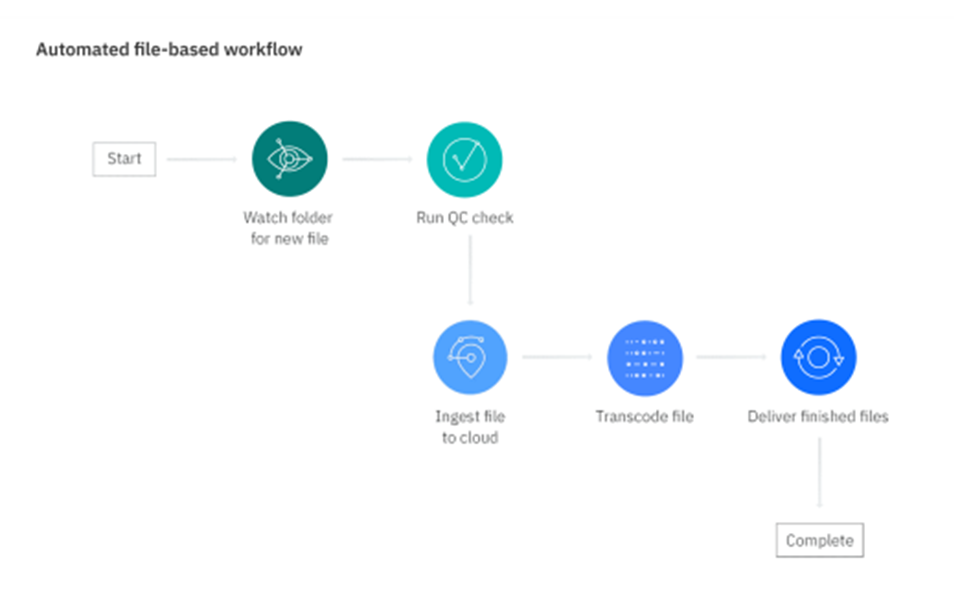
By combining IBM Aspera’s built-in Aspera High-Speed Transfer technology with fully automated workflows, enterprises can use the Aspera Web application, API interface, and a rich set of third-party extensions including format conversion, virus scanning, and embedded advertising to build custom file transfer automation workflows, effectively reducing the high costs of manual operations.
Quickly deliver data of any size and quantity
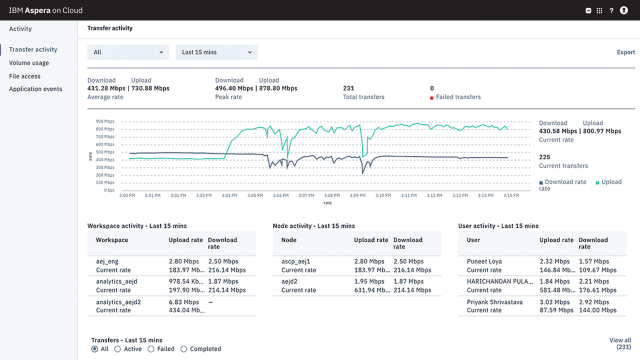
IBM Aspera Console enables manual or automated file and directory transfers based on patented Aspera FASP high-speed technology, allocating bandwidth by priority regardless of file size or quantity. It delivers critical enterprise data to global customers, partners, and internal staff across any distance or network condition.
Quickly, securely, and reliably transfer data
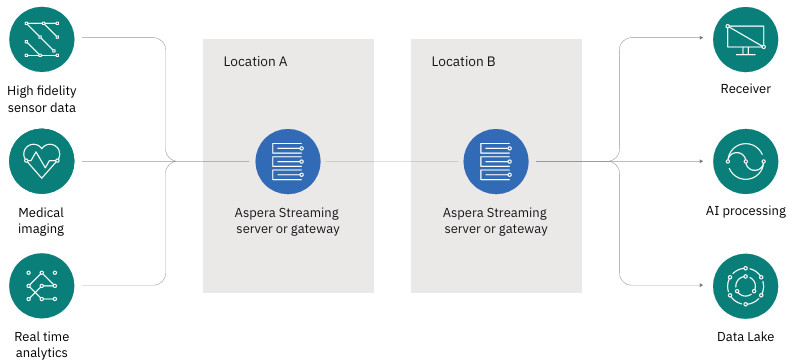
IBM Aspera delivers high-speed, secure, and stable file transfer services for multinational enterprises, enabling rapid large-scale data migration between global data centers and major cloud platforms without dedicated leased lines. It supports at-rest encryption during transfer, enhanced authentication, and data integrity verification to ensure end-to-end security and protect critical enterprise data.
Expected Benefits
Automated Transfer Efficiency Optimization
IBM Aspera’s automated collaboration processing feature significantly simplifies complex file transfer workflows, automating file transfer and management to provide users with ultra-fast, robust, and secure file transfer services.
Achieve effective file sharing
IBM Aspera utilizes parallel computing, cluster operations, and GB-level transfer speeds to synchronize the entire enterprise file sharing architecture, breaking through the limitations of traditional file synchronization tools such as long transfer distances and network congestion, providing enterprises with ultimate performance and efficiency in file sharing services.
Large File Transfer and Flexibility
IBM Aspera’s file transfer technology is not limited by the distance between internal data centers and cloud data rooms. By sending and synchronizing large files and datasets, it reduces data transfer time, optimizes bandwidth allocation, lowers transfer costs and risks.
IBM webMethods Hybrid Integration
IBM webMethods Hybrid Integration is a modern integration platform designed for today’s enterprises, meeting demands for AI applications, API expansion, and digital transformation. Combining IBM’s premier integration capabilities, it supports diverse patterns across on-premises and multi-cloud environments – from mainframe access and B2B exchange to AI-powered solutions with watsonx – bridging legacy systems with next-generation technology to reduce complexity, enhance agility, and accelerate innovation.
A hybrid integration platform for enterprises that blends tradition and innovation, supporting hybrid cloud environments
Digital transformation presents enterprises with highly complex, multidimensional integration challenges. Rapid proliferation of applications, APIs, and data sources—coupled with AI adoption—creates “integration silos,” “vendor sprawl,” and “connection chaos.” Traditional integration tools cannot keep pace with this evolution, leaving developers and business users struggling to drive new business models, improve efficiency, or unlock AI’s full potential.
IBM webMethods Hybrid Integration is designed to solve these challenges, unifying integration across on-premises and multi-cloud environments through a single centralized platform for applications, data, and processes. Supporting diverse integration patterns, centralized governance tools, and native IBM watsonx AI capabilities, it streamlines workflows while accelerating innovation for developers and business teams. The platform reduces operational friction, strengthens security and compliance, and enables enterprises to scale confidently in hybrid environments without sacrificing agility.
Key Features
Cloud-encrypted transmission enhances file exchange efficiency
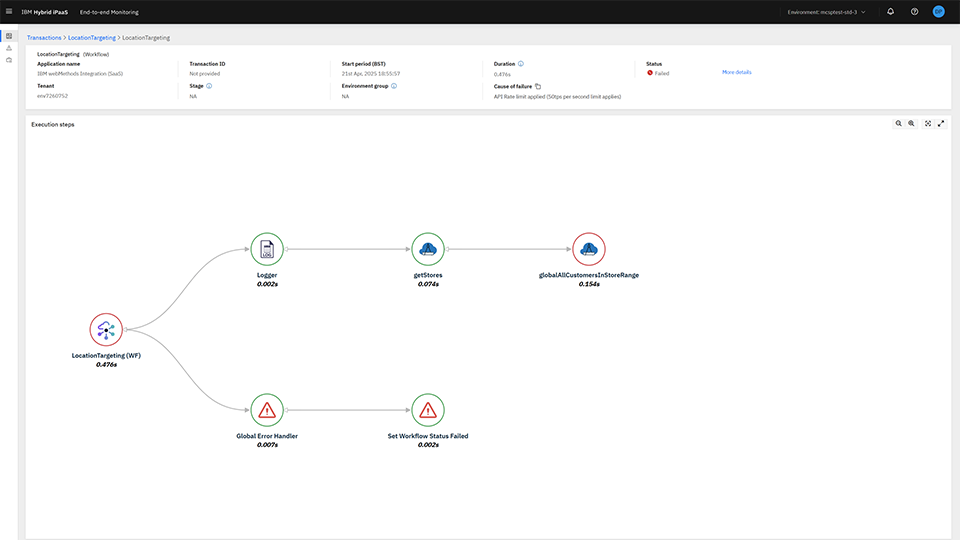
IBM webMethods Managed File Transfer delivers modern file transfer solutions enabling fast, secure, encrypted transmission of any file size. The platform features automated workflows, real-time visibility, and AI-driven integration to reduce risk, eliminate manual errors, and ensure compliance. It guarantees accuracy and integrity for critical business data while enhancing file exchange efficiency and operational stability.
Link supply chain partners to enhance business integration capabilities
IBM webMethods B2B Integration rapidly connects supply chain partners regardless of system age or architectural complexity, enabling seamless integration and instant exchange of orders, invoices, and shipping notices. Its built-in self-service portal streamlines partner onboarding with automated transaction configuration and supports AWS and Azure deployment, delivering flexibility and scalability to accelerate global supply chain collaboration and digital transformation.
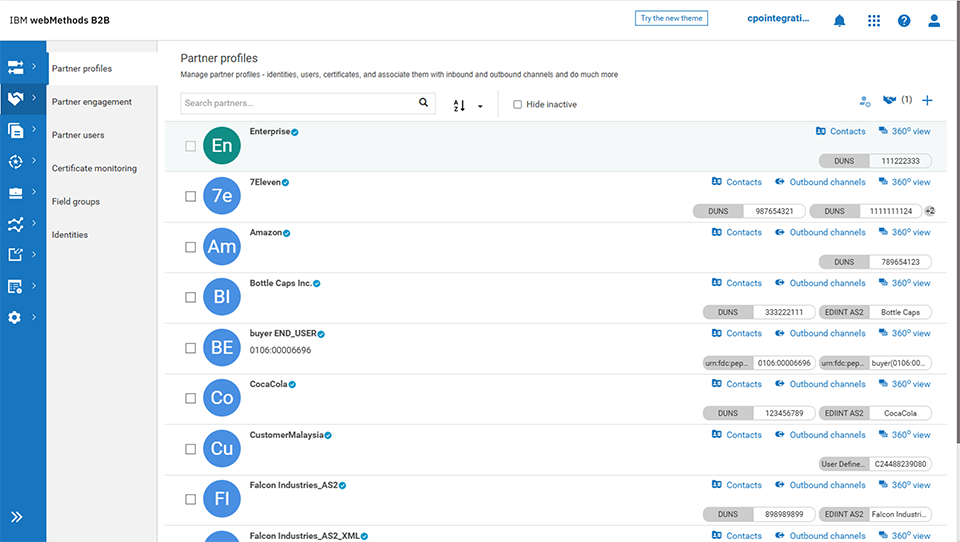
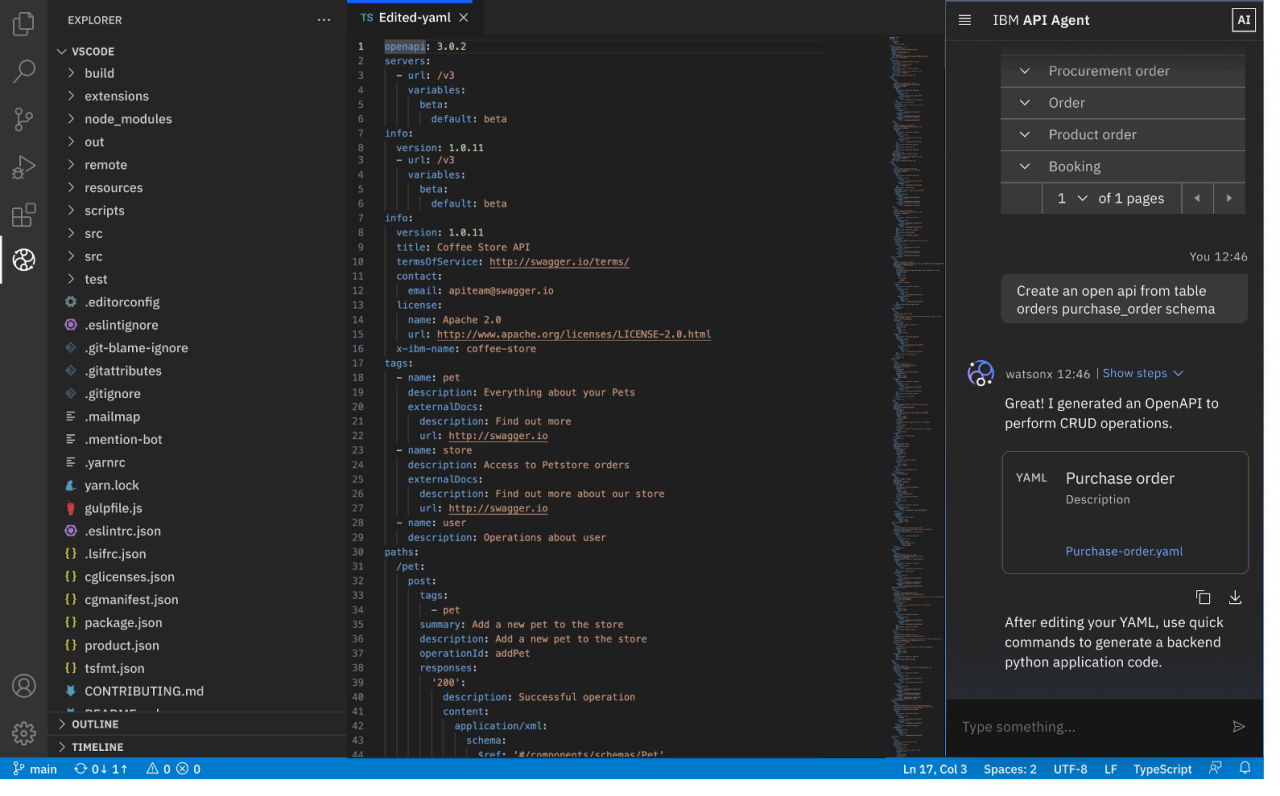
Full lifecycle management enhances API application value
IBM webMethods API Management delivers complete API lifecycle management from design and development through protection and community sharing. Users can convert integration processes into APIs with a single click, rapidly expanding digital reach. The platform features Gen AI automation to reduce manual operations and enhance quality, enabling businesses to treat APIs as products for strategic planning and continuous alignment with business needs.
Easily integrate applications to accelerate business automation
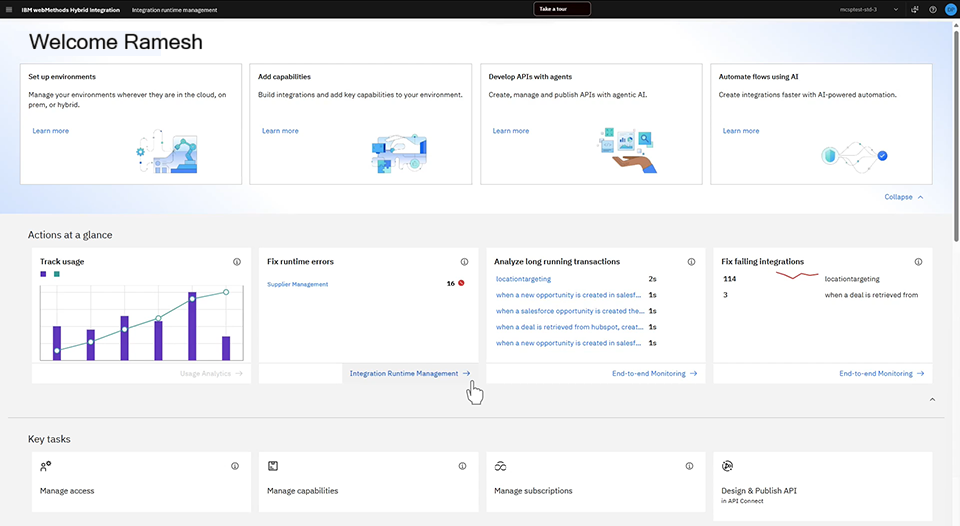
IBM webMethods Integration delivers cloud-first application integration, seamlessly connecting new and legacy systems without requiring deep technical expertise. Users can rapidly build integration processes, automate daily tasks, and improve efficiency across on-premises and multi-cloud environments. It flexibly adapts to simplify complex architectures, helping businesses reduce costs and accelerate innovation.
Expected Benefits
Optimize B2B integration to accelerate value realization
Streamlined partner portals and automated workflows significantly reduce setup time and management overhead, ensuring stable, reliable business data exchange to enhance collaboration efficiency and accelerate digital transformation and business value realization.
Enhance operational visibility efficiency through integration and monitoring
Through end-to-end integration and hybrid control platforms, enterprises achieve comprehensive monitoring across hybrid and multi-cloud environments, enhancing operational transparency and decision-making efficiency for optimized business performance.
Integrating AI-driven business innovation
Intelligent agentic AI continuously learns from interactions, automatically monitoring performance and resolving common issues to enhance application integration efficiency, reduce manual workload, and drive ongoing business optimization and innovation.
API-driven agile business architecture
Leveraging API composability and event endpoint management, enterprises can rapidly reuse and extend integration processes for seamless cross-system connectivity, improving response speed and business agility.
IBM ELM DOORS Next
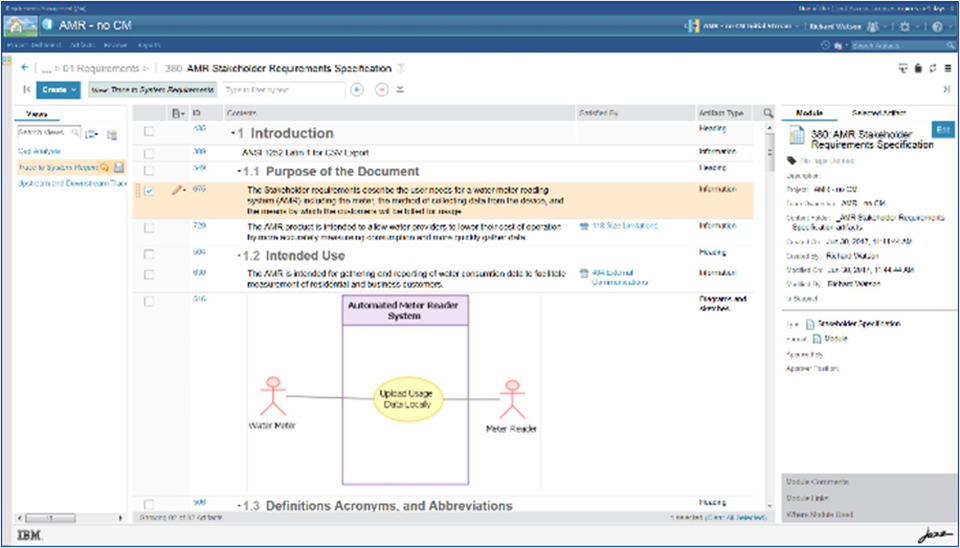
IBM Engineering Requirements Management DOORS Next is the requirements management solution within the IBM Engineering Lifecycle Management platform. For systems software and manufacturing product development, it captures, traces, analyzes, and manages user requirements to control R&D costs and accelerate time-to-market.
Enterprise Product Development Lifecycle Requirements Management Solution
As products grow increasingly complex, enterprises face mounting pressure to deliver high-quality outcomes faster and at lower cost while meeting stricter regulations and customer demands. Requirements management becomes critical as it defines development direction and standards; however, poorly captured, tracked, or managed requirements lead to errors, rework, collaboration inefficiencies, compliance risks, and ultimately threaten overall development success.
IBM Engineering Requirements Management DOORS Next is a widely adopted requirements management solution across industries, providing a centralized platform for teams to capture, analyze, track, and manage requirement changes while ensuring compliance with industry regulations and standards. Whether deployed standalone or integrated within the IBM Engineering Lifecycle Management (ELM) platform, DOORS Next serves as a solid foundation for development processes, enhancing transparency, reducing risk, and helping enterprises maintain efficiency and competitiveness in complex development environments.
Key Features
Optimize development environment operations through open integration and collaboration
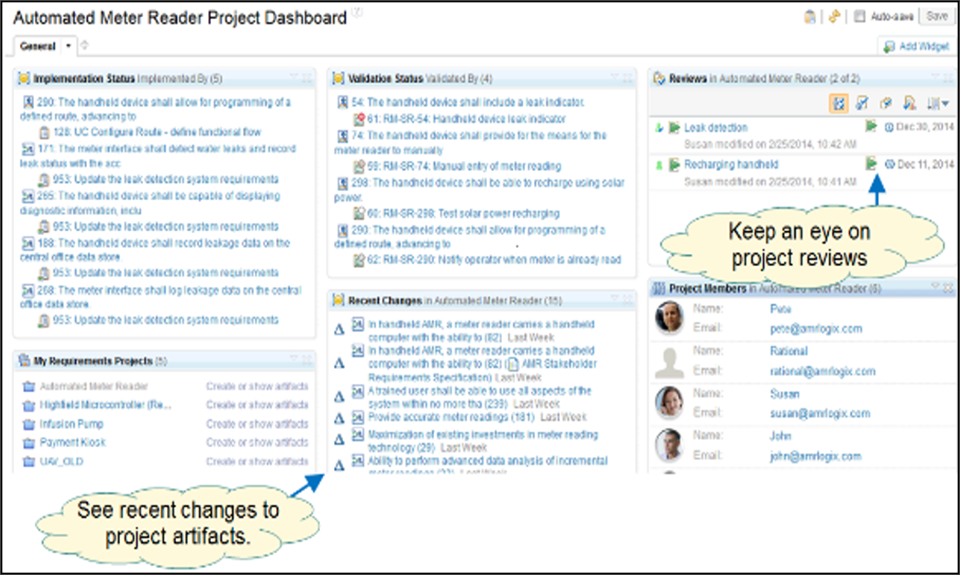
IBM Engineering Requirements Management DOORS Next supports OSLC standard interfaces and API integration for seamless connectivity with diverse development tools, breaking down internal and external silos. Acting as a centralized requirements management hub, it enables different teams and partners to share engineering data, improving cross-tool and cross-departmental collaboration. As products grow more complex, DOORS Next helps enterprises integrate diverse development resources and processes, eliminating rework and data gaps to optimize overall development environments and maximize engineering data utilization.
Design Reusability to Improve Efficiency and Quality
IBM Engineering Requirements Management DOORS Next combines with Global Configuration Management to enable cross-product subsystem reuse, effectively reducing development time and costs. Through version and variant management capabilities, the system automatically tracks changes to shared subsystems, ensuring consistency and accuracy across every product version while enhancing overall product quality, development productivity, and accelerating time-to-market.
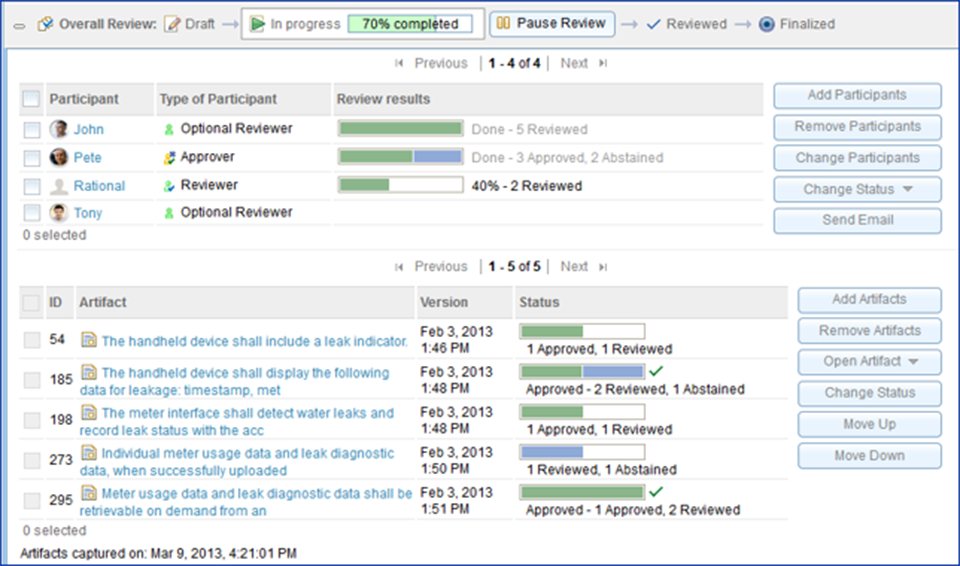
Lifecycle Demand Management for Information Assets
IBM Engineering Requirements Management DOORS Next effectively tracks every requirement’s status and change history while supporting cross-departmental communication and review. Through rigorous version control and change management, DOORS Next serves as a critical foundation for regulatory compliance and audit readiness, ensuring all requirements maintain traceability, completeness, and currency while significantly enhancing product development transparency and consistency.
Expected Benefits
Cross-system change coordination ensures development consistency
Cross-system change management mechanisms unify deliverables throughout the product development process, ensuring departmental operations remain consistent and synchronized. Effective change coordination reduces error risks, enhances communication efficiency, and strengthens product consistency and schedule control capabilities.
Visualize the root causes of quality issues in relationship analysis
Visualizing relationships between versions and components helps teams rapidly grasp impact scope for effective root cause and impact analysis, improving problem resolution efficiency, reducing error risks, and ensuring product quality and precision in subsequent improvements.
Integrate data silos to connect the engineering lifecycle
Integrating ALM, PLM, manufacturing, and operational data establishes a single digital thread that breaks down departmental data silos, enhancing engineering process consistency and traceability, promoting team collaboration, accelerating issue resolution and decision-making, and comprehensively optimizing product development quality and delivery speed.
IBM watsonx
A next-generation generative AI application platform tailored for businesses
IBM watsonx is a next-generation generative AI application platform built on open technology and architecture, meeting the stringent requirements of businesses for generative AI in terms of transparency, accuracy, governance, and regulatory compliance. watsonx enables businesses not just to be users of generative AI, but also creators of AI value, helping them accelerate the application of innovative AI technologies and seize new opportunities for digital transformation.
Featured Software
IBM watsonx.ai
A next-generation enterprise Al platform for Al designers to train, validate, tune, and deploy generative AI models
Enterprise AI Work Platform
IBM watsonx.ai is the core component of the IBM watsonx platform, integrating the foundational model prompts and parameter tuning required for generative AI, as well as the modeling training and deployment inference needed for traditional machine learning, into an enterprise-grade AI work platform that spans the entire AI lifecycle. Whether it’s natural language-based Q&A, professional document content generation, meeting notes and contract summarization, retail customer segmentation and tagging, customer churn risk prediction, predictive maintenance in manufacturing, real-time product recommendations in e-commerce, or order and production scheduling optimization, the toolset provided by the watsonx.ai platform enables businesses to quickly realize the value of AI and gain a competitive edge in the demanding business environment.
Key Features
Foundation Model Library
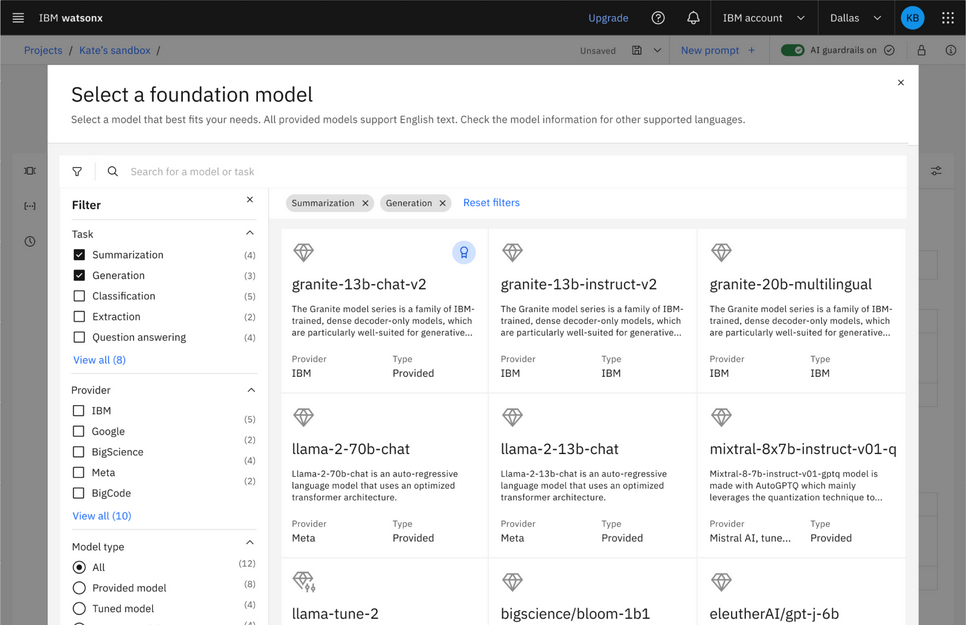
Enterprises can choose from IBM Granite, the built-in foundation models within the watsonx.ai platform, or third-party foundation models selected by the Hugging Face community (including Llama 3 and Mixtral 8x7b) based on their needs. This enables generative AI language models to support enterprise-specific business requirements or integrate into various Retrieval-Augmented Generation (RAG) application scenarios, creating a better user experience for businesses.
Tuning Studio
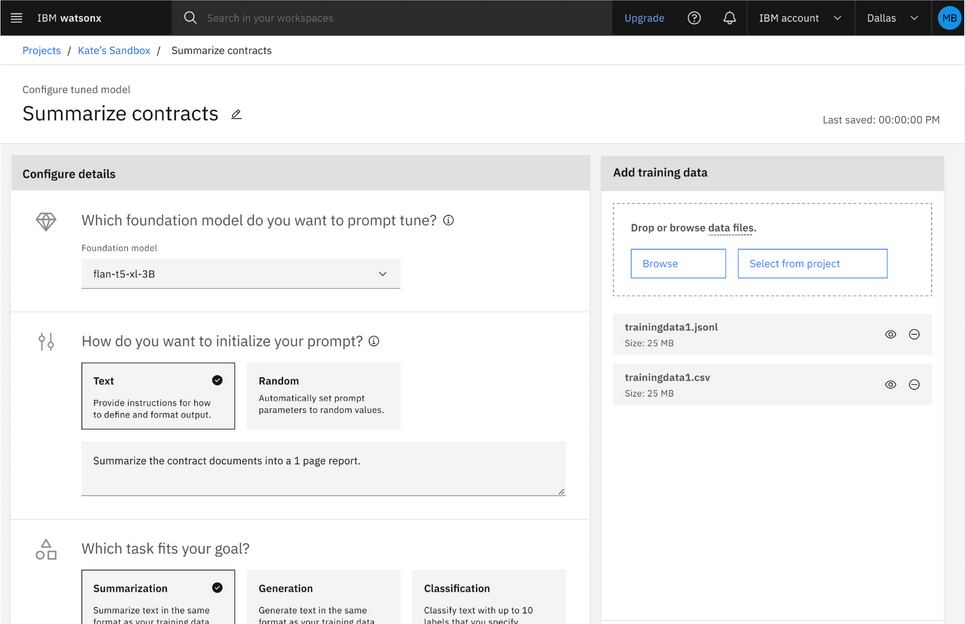
The Tuning Studio allows users to adjust the base language model through pre-prepared labeled data to achieve better performance and accuracy. Model tuning is divided into two modes, Prompt-tuning is an efficient and low-cost method that enables the base model to adapt to task requirements without retraining the model and updating weights. Fine-tuning optimizes the parameter weights of the underlying base model through enhanced training, thereby optimizing the quality and coherence of text generated by the language model.
Machine Learning Operations
watsonx.ai provides a secure and collaborative AI data science work environment, where data science teams can use Python and R code development frameworks, automated modeling, or visualization tools to build machine learning models. It also integrates tools and execution environments to manage and automate the entire AI model lifecycle, including training, validation, and deployment of AI models.
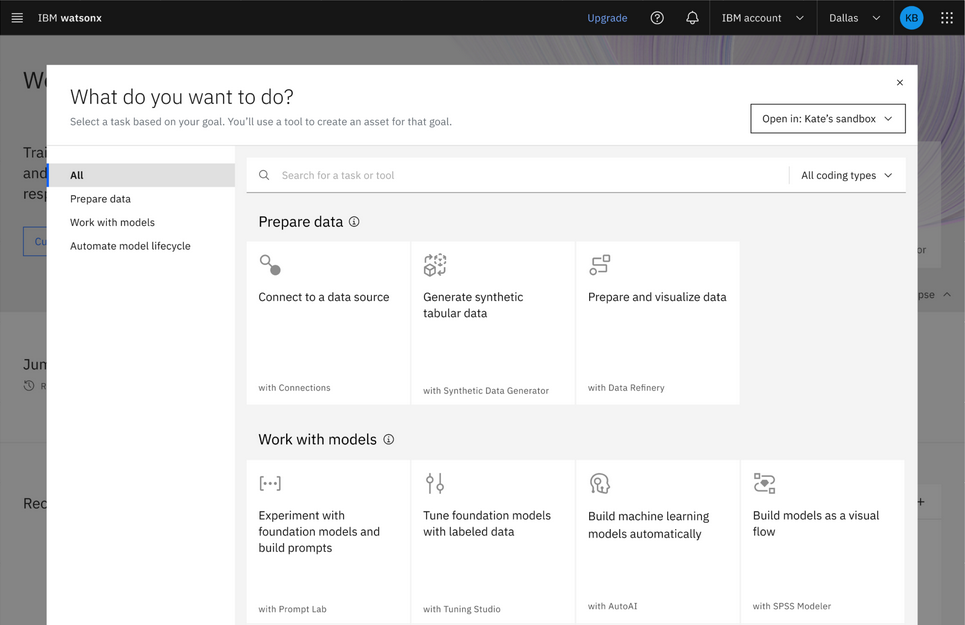
Prompt Lab
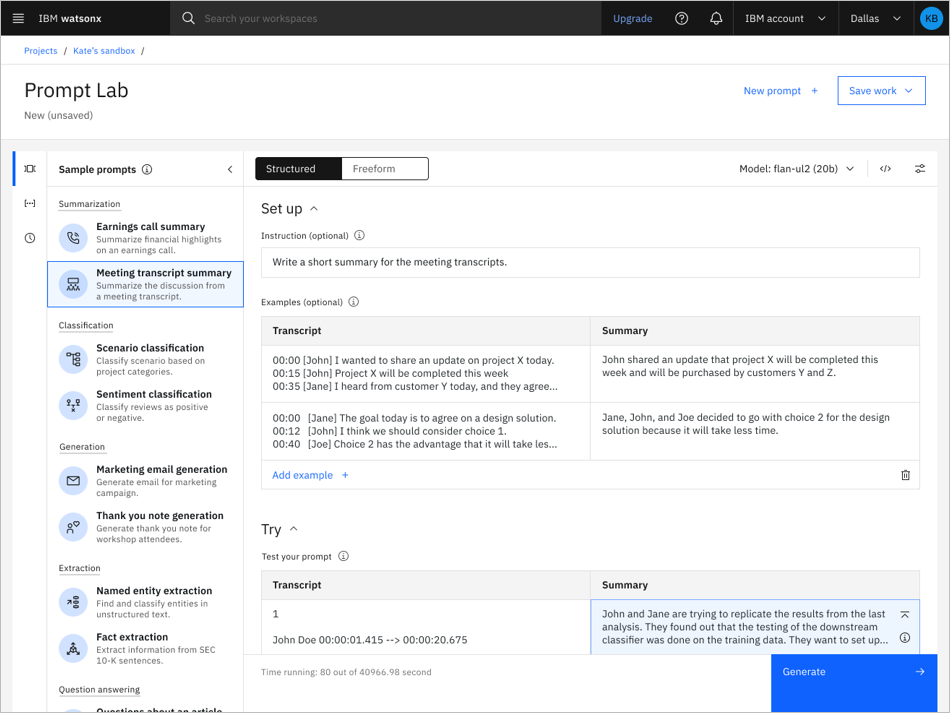
In the Prompt Lab, users can interact with the foundational language models using modes such as chat, free-form, or structured. Additionally, Prompt Lab includes a series of prompt templates based on natural language processing (NLP) types, including Q&A, content generation and summarization, text classification and extraction, etc., accelerating the design of optimal model prompt engineering configurations.
Expected Benefits
Creating a unified AI collaborative work environment for businesses
AI data science teams can create AI assets using their own tools in a secure and reliable work environment.
Effectively manage the entire AI lifecycle
Utilize automated process design to standardize and automate AI model development and deployment processes, achieving comprehensive AI model lifecycle management.
Accelerate the application of generative AI in enterprise service processes
Leveraging foundational models and generative AI technology, with minimal data, advanced prompt tuning capabilities, comprehensive SDKs and APIs, to accelerate the realization of AI value.
IBM watsonx.data
A corporate-grade data infrastructure platform based on an open lake-house architecture, meeting scalable data querying and Al workloads.
Integrated Lakehouse Solution
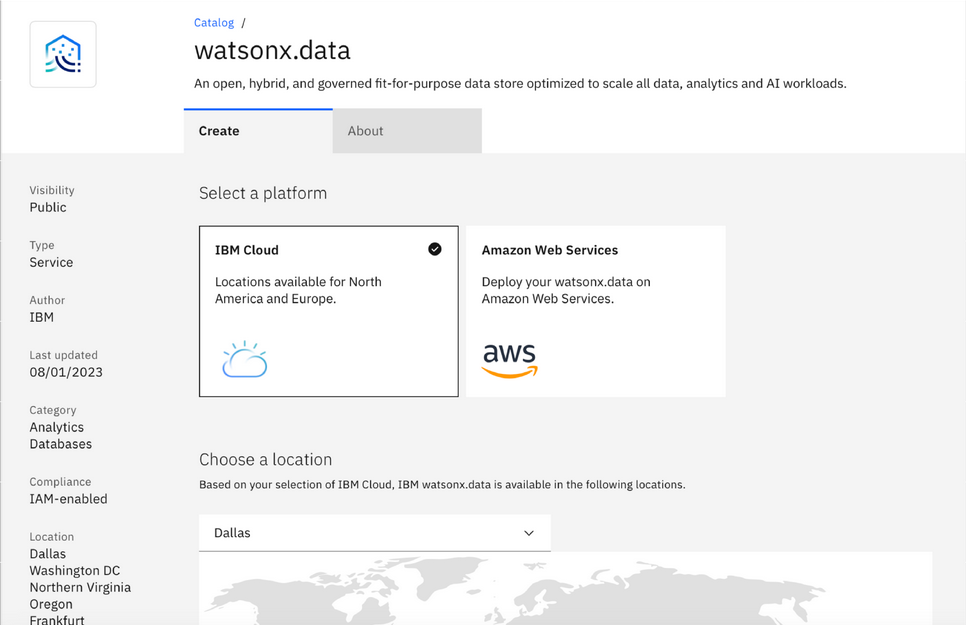
IBM watsonx.data is a modern data infrastructure platform within the IBM watsonx platform that handles collection, storage, querying, and analysis. Based on the integrated lakehouse architecture concept, watsonx.data combines the controllability and high quality of data warehouse storage for standardized data model structures with the low-cost storage and scalability flexibility of data lakes. It allows businesses to easily access all data across cloud and on-premises environments and leverage multiple query engines to perform analytical and AI workloads while reducing the cost of building physical data warehouse systems. watsonx.data not only helps data-driven enterprises effectively reduce data storage costs but also optimizes AI computing capabilities. Whether facing challenges related to massive data, complexity, cost, or governance, watsonx.data can assist businesses in handling these issues with ease.
Key Features
Query and Analysis Engines Suitable for Various Use Cases
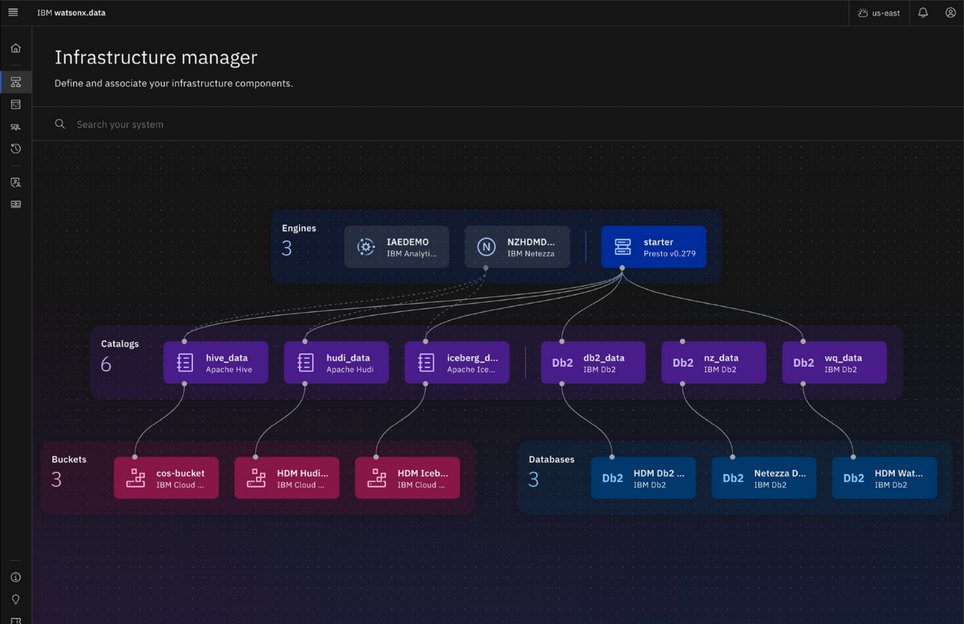
watsonx.data includes built-in Presto and Spark engines, providing fast, reliable, and high-performance data querying and analysis capabilities for data lakehouses. Businesses can choose the appropriate engine based on different use cases to handle workloads (e.g., BI reports and real-time analytics, AI machine learning modeling applications).
- Spark: A well-known open-source data analysis engine, suitable for data engineering, data science, and machine learning workloads.
- Presto: An open-source, distributed architecture SQL query engine, designed for fast and efficient analytical queries on large-scale data.
Built-in metadata management and security access control features
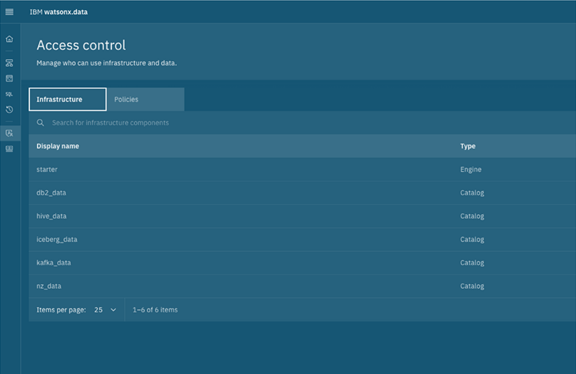
watsonx.data includes an Apache Hive Metastore for managing metadata and security, while also providing comprehensive management features for metadata catalog, lineage relationships, and data access control, meeting enterprise requirements for data access, privacy security, and regulatory compliance. Additionally, watsonx.data seamlessly integrates with the IBM Watson Knowledge Catalog data governance solution, allowing users to share enterprise data assets through a single entry point.
- Accelerate the organization of large existing data sets, create knowledge catalogs and data standards.
- Implement data governance processes, privacy policies, and access rules in a systematic manner.
- Automatically perform data exploration and continuously track and ensure data quality.
Open, extensible data table format
watsonx.data supports open file storage formats such as Avro, Parquet, and ORC, while using Apache Iceberg, a high-performance data table format suitable for large-scale data processing and analysis, to create a shared intermediate data layer. This enables different engines to access and share data simultaneously. Apache Iceberg features the following:
- Bring SQL reliability and ease of use to Data Lake data.
- Support ACID properties to ensure the consistency of transactional data.
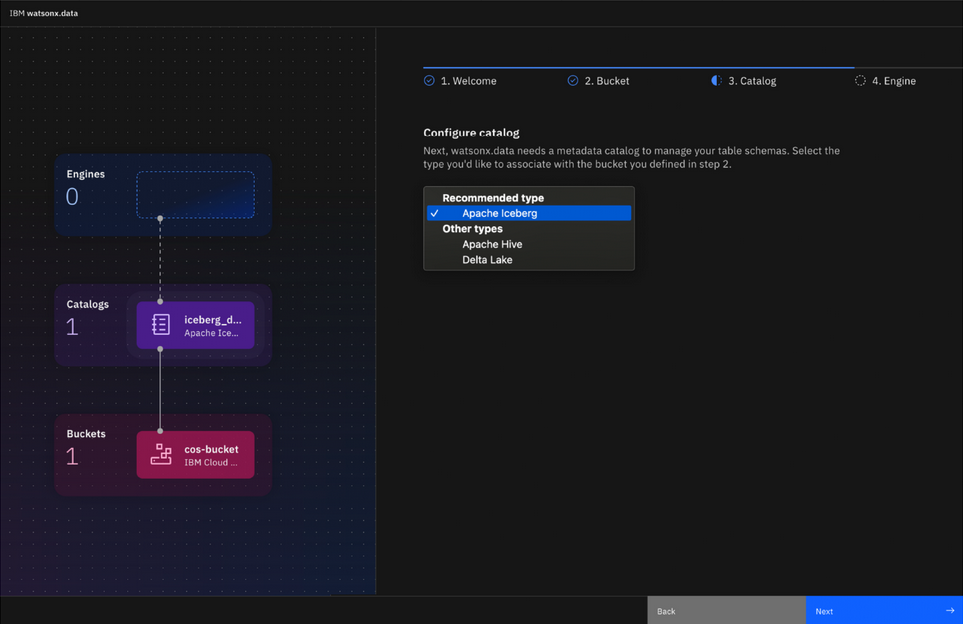
Supports hybrid cloud deployment and an economically efficient object storage architecture
Combined with Red Hat OpenShift container management, the watsonx.data architecture supports deployment in a hybrid manner across cloud and on-premises environments, allowing users to access data from anywhere, while also requiring the ability to flexibly scale resources based on actual usage increases. Additionally, enterprises can utilize simple object stores (Object Stores) to store large amounts of data at a simplified cost.
- No need to worry about storage space for data warehouses.
- Supports a distributed architecture to provide highly available storage services, with data automatically generating redundant copies across distributed nodes to prevent data loss.
- The storage service has a relatively low cost, with more suppliers to choose from, and it can also avoid being tied to a single manufacturer.
Expected Benefits
Achieve more real-time business intelligence analysis
Combine data from existing data warehouses with new data in watsonx.data to quickly generate new business insights and perspectives, without needing to copy and move data between different environments, reducing development costs and operational complexity.
Achieve a more streamlined data engineering process
Simplify data extraction, transformation, and loading (ETL) pipeline operations, using appropriate and familiar SQL and Python technologies or integrating generative AI dialogue interfaces to create richer and more user-friendly experiences.
Achieve more efficient AI/ML model deployment
Create, train, tune, deploy, and monitor trusted AI and machine learning models for mission-critical workloads in watsonx.data; enhance compliance with the lineage and reproducibility of data used for AI.
Implement a more reliable data sharing environment
Through centralized data governance and policy enforcement capabilities, enhance control over data security and compliance, allowing more users to access and utilize data through self-service methods to create enterprise competitive value.
IBM watsonx.governance
Designed to achieve the trend of trustworthy AI development, meeting enterprise needs for Al lifecycle governance, risk
management, and regulatory compliance.
Enterprise AI Lifecycle Governance Platform
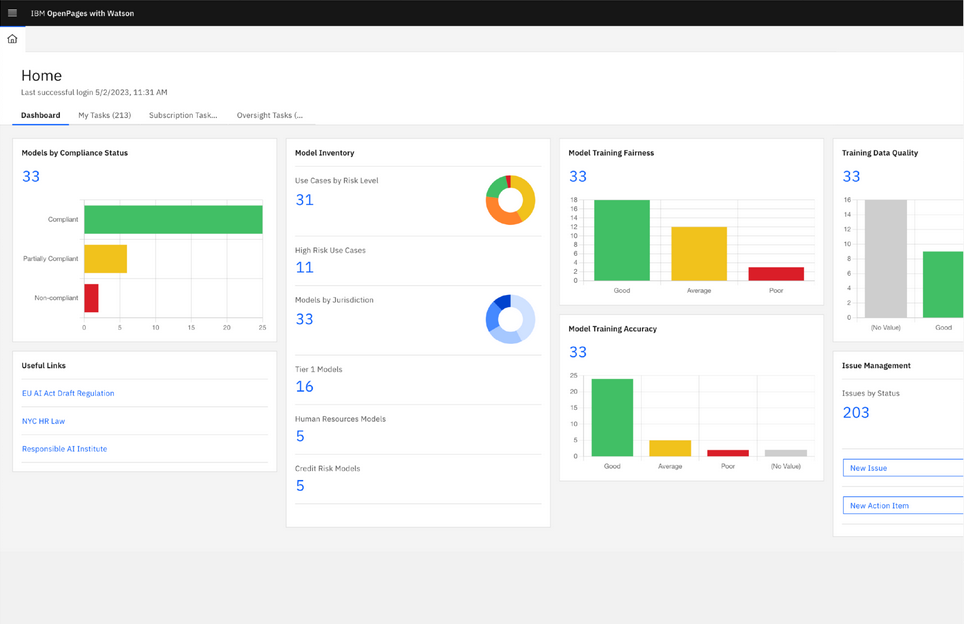
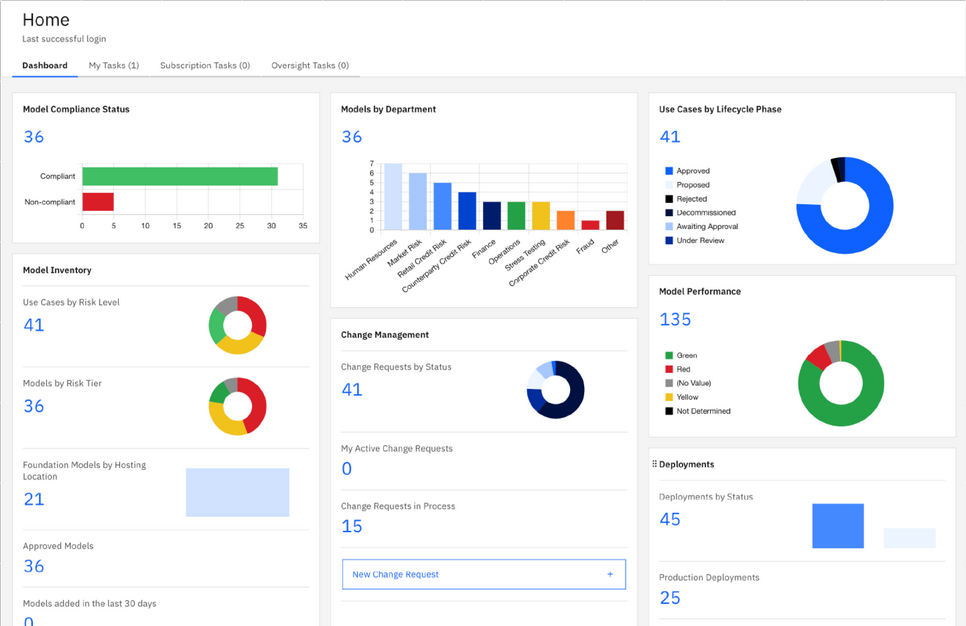
IBM watsonx.governance is a critical component within the IBM watsonx platform that plays a key role in enterprise AI lifecycle governance. Through watsonx.governance, enterprises can effectively manage and monitor the complete lifecycle of generative AI and predictive machine learning models within an integrated management platform. AI models, whether deployed in cloud or on-premises environments, can utilize the built-in monitoring metrics and visualization dashboards in watsonx.governance to track the operational status and predictive capabilities of the models. At the same time, watsonx.governance also actively collects and integrates model metadata and key data during the AI lifecycle, ensuring transparency in AI model management and meeting compliance and audit requirements.
Key Features
Compliance and Regulatory Management
watsonx.governance delivers comprehensive AI compliance and governance, helping businesses rapidly adapt to evolving global regulations like the EU GDPR and AI Act. This reduces the risk of costly fines and legal disputes while ensuring sustained operational compliance. The platform features a built-in, customizable compliance framework supporting multiple standards, tailored to specific business needs. For generative AI, organizations gain deep visibility into LLM details—including training data, model provenance, metrics, and decision logic—mitigating legal and ethical risks.
AI Lifecycle Governance
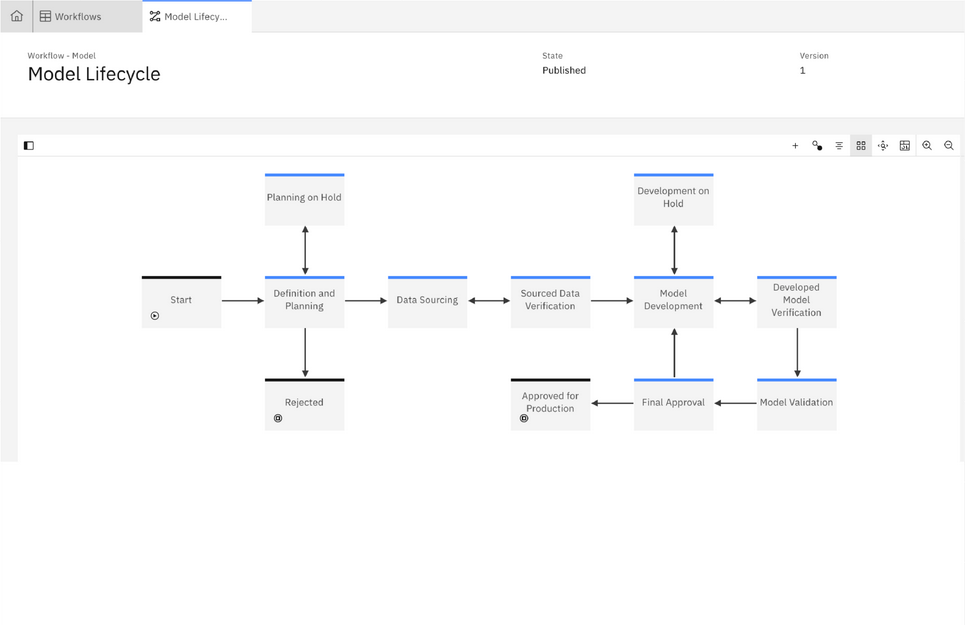
Integrating generative AI and predictive ML governance into watsonx.governance provides enterprises with comprehensive AI lifecycle management—including regulatory compliance, internal development workflows, model interpretability, fairness, drift and bias monitoring, and harmful content detection. This streamlines AI operations from development through maintenance, accelerating model iteration and deployment while ensuring quality, performance, and adaptability in dynamic business environments.
Quality and Risk Management
watsonx.governance features proactive model monitoring and alerting to manage AI quality and risk, continuously tracking model drift to ensure stable performance amid changing data and triggering immediate alerts when performance declines for rapid resolution. The platform also delivers model interpretability, enabling users to understand decision logic and key influencing factors. Together, these capabilities help enterprises mitigate AI risks while ensuring model quality and reliability.
Expected Benefits
Enhance the interpretability of AI model decision-making processes
By improving the interpretability of AI models, it becomes clearer to understand the logic behind AI decisions, not only increasing customer trust but also helping to meet industry regulations and the requirements of regulatory authorities, reducing compliance risks. Additionally, it aids the development team in better understanding and optimizing the performance of AI models.
Avoiding risks and compliance issues arising from cross-departmental communication
By implementing effective cross-departmental communication and information parity, businesses can more accurately assess and manage model risks. This not only enhances the efficiency and agility of business operations but also reduces the risks that may arise from errors during the AI governance process.
Enhancing AI development process transparency through automated process management
By automating and documenting the processes of the AI lifecycle, not only are errors and delays caused by human operations reduced, but all information during the development of AI models can be meticulously recorded, such as use cases, approval processes, and sources of training datasets, thereby making the model development process transparent.
Business Process Automation
Utilize intelligent tools to effectively integrate key resources such as important personnel, machinery equipment, and information application systems in business processes, accelerating response to continuously changing market conditions
In the era of digital competition, automating workflows required for daily operations will help shorten process times, thereby increasing customer satisfaction and reducing operational costs. IBM Business Process Automation solutions gather software tools based on artificial intelligence technology, assisting businesses in using Robotic Process Automation (RPA) to automate repetitive tasks, achieving an optimal human-machine collaboration work environment. Additionally, facing the explosive growth of digital content assets, the IBM Digital Content Management platform can effectively enhance a business’s capabilities in collecting and storing, digital asset governance, and information sharing and collaboration.
Featured Software
IBM Business Automation Workflow
Automate the operation of various types of work, simplify cumbersome and complex workflows, drive record management tasks, narrow skill gaps, use data to identify skill gaps, and then leverage artificial intelligence to build low-code and no-code automation processes. Deploy anytime, anywhere, with validated results.
Transform distributed workflows and maintain competitiveness
IBM Cloud Pak for Business Automation is a highly flexible, powerful, modular software solution designed for complex hybrid cloud environments, transforming distributed workflows and maintaining competitiveness through advanced automation tools and intelligent process management. It effectively enables comprehensive automation from simple tasks to complex workflows, significantly improving operational efficiency, reducing costs, accelerating business growth, and empowering rapid digital transformation.
Key Features
Content Services
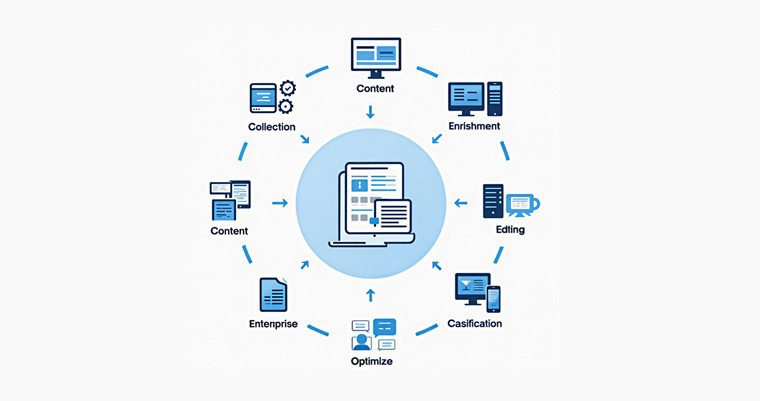
Collect, enrich, manage, and govern enterprise content to enable efficient deployment across any cloud environment and application.
Document Processing
Automate and simplify transforming unstructured content—paper, digital files, and images—into valuable data.

Workflow
Operate your business through automated case and process workflows, reducing or eliminating time-consuming tasks.
RPA and Digital Workforce
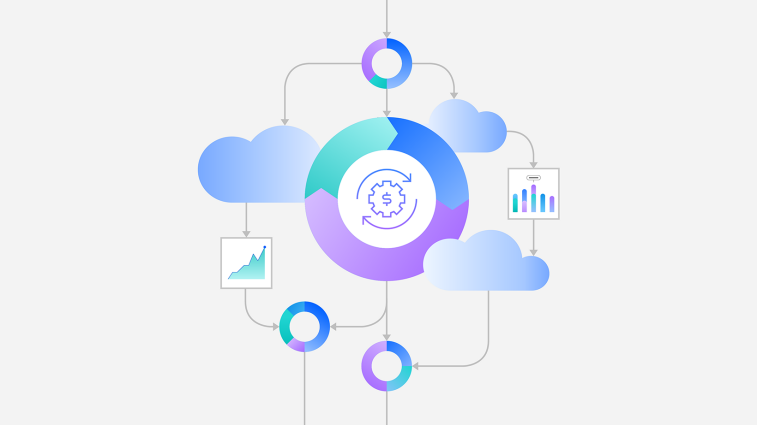
Leverage software robots to automate business and IT processes at scale, completing tasks based on AI insights without delay.
Process Mining
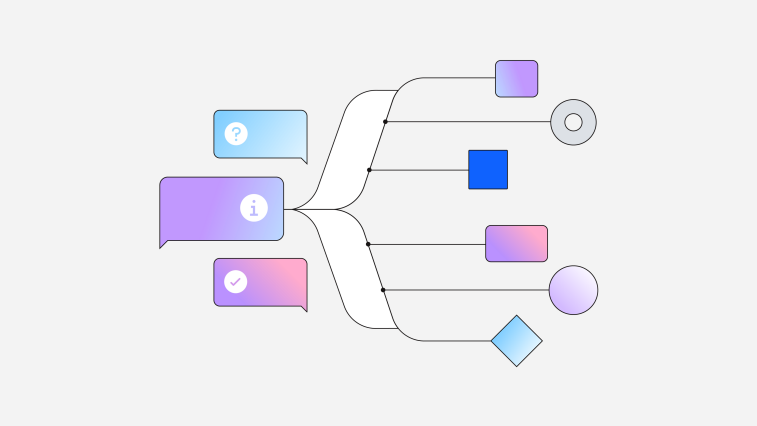
Make faster, smarter decisions through data-driven insights, identify inefficiencies, and drive continuous process improvement.

Decision Management
Create and manage business rules independently of applications and processes to deliver precise, personalized decisions.

Expected Benefits
Accelerate operational efficiency through end-to-end intelligent automation
By automating repetitive tasks, document processing, and complex workflows across departments, businesses can significantly reduce manual intervention and operational costs while enabling employees to focus on high-value strategic initiatives that drive growth.
Improve decision quality and business agility with data-driven insights
By leveraging process mining and AI-powered decision management capabilities, organizations can identify operational inefficiencies, predict business outcomes, and make precise, personalized decisions in real-time, ensuring optimal performance in rapidly changing markets.
Ensure regulatory compliance and mitigate operational risks
By standardizing document processing, automating governance workflows, and maintaining comprehensive audit trails across all automated processes, enterprises can ensure data accuracy, meet stringent regulatory requirements, and reduce compliance risks while maintaining full transparency.
IBM FileNet Content Manager
IBM FileNet Content Manager is a flexible, feature-rich document-centric content management solution. It manages all file types and formats throughout their lifecycle—from creation to final publication—providing a unified access point for all enterprise documents. This improves data quality, eliminates silos, and enables strong compliance and governance.
A flexible, feature-rich, and document-centric content management solution.
In a competitive business environment, enterprises make numerous decisions daily. The quality of these decisions depends on accessing the right information, which often resides in various forms of digital documents. Effectively managing this content is essential for business success. Managing and leveraging critical decision-making information, regardless of format, has become a key factor in competitive advantage.
IBM FileNet Content Manager helps organizations significantly enhance the availability and agility of business document content by integrating digital content with business processes. It enables proactive control over large volumes of unstructured document assets. By unifying document and content management on a single platform, enterprises can respond promptly to business and transactional events, triggering key workflows and driving them to rapid completion. This enhances overall operational responsiveness and flexibility.
Key Features
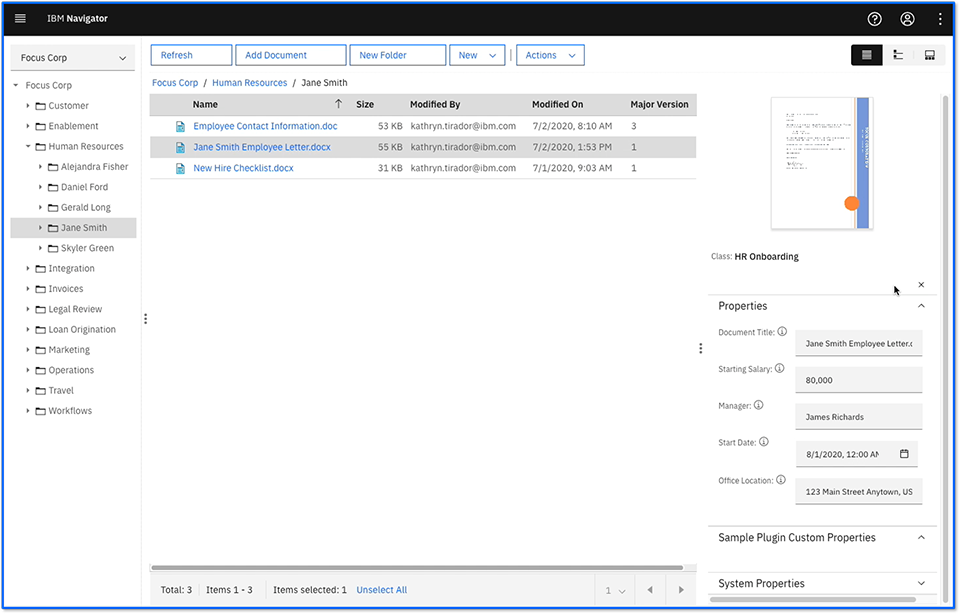
Intelligent Document Classification and Metadata Management
IBM FileNet Content Manager includes built‑in intelligent capture and auto‑classification. It classifies documents based on their attributes and automatically defines corresponding metadata. This includes classification of personally identifiable information (PII), contextual classification based on content, and customizable classification logic tailored to business needs (e.g., for email MIME formats). Index properties can also be added to documents to improve indexing efficiency.
Intelligent Document Processing and Integration
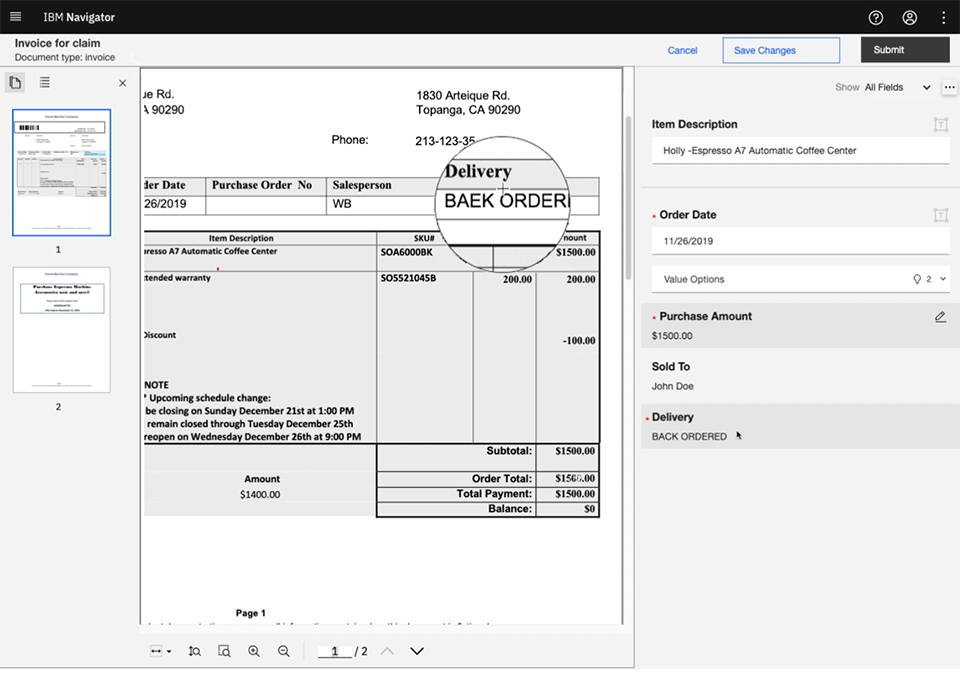
The solution provides intelligent document processing capabilities, enabling flexible handling at different stages of a document’s lifecycle.
- Extraction stage: Using an AI‑based deep learning engine, it extracts data from electronic forms, business reports, and unstructured documents—such as text fields, simple tables, checkboxes, and natural language text.
- Refinement stage: AI‑driven automatic data correction and suggestions are provided, along with interactive data validation, ensuring trustworthy output.
- Application stage: Processed documents can be stored long‑term in IBM FileNet Content Manager or shared via APIs with other workflow platforms, RPA tools, and applications.
Granular Document Security and Auditing
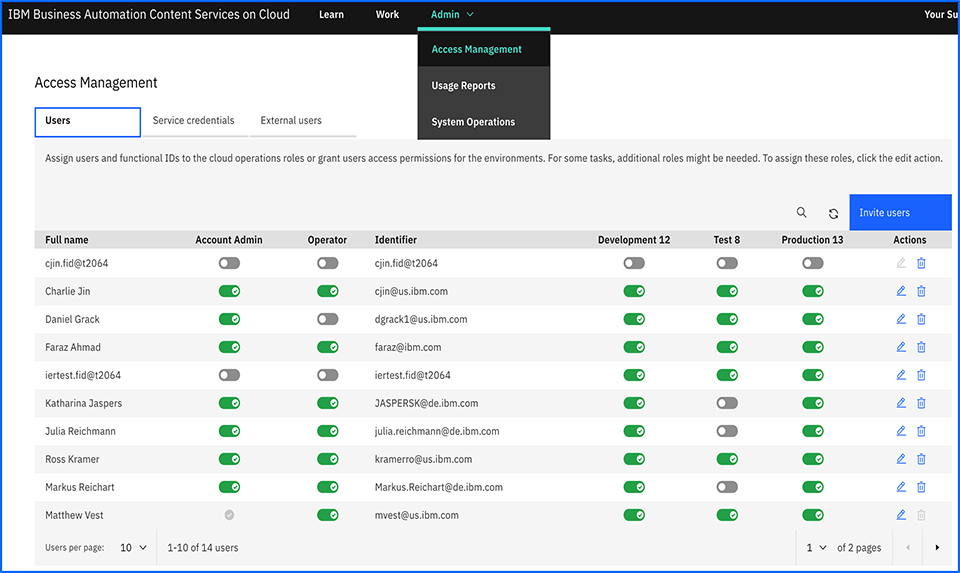
IBM FileNet Content Manager offers role‑based, fine‑grained access control. Each document is protected by an access control list defining which users or groups can view, modify, or delete documents and their attributes. All operations on stored documents are fully logged, allowing administrators to review actions taken, timestamps, and performers.
Seamless Integration with Microsoft Office Tools
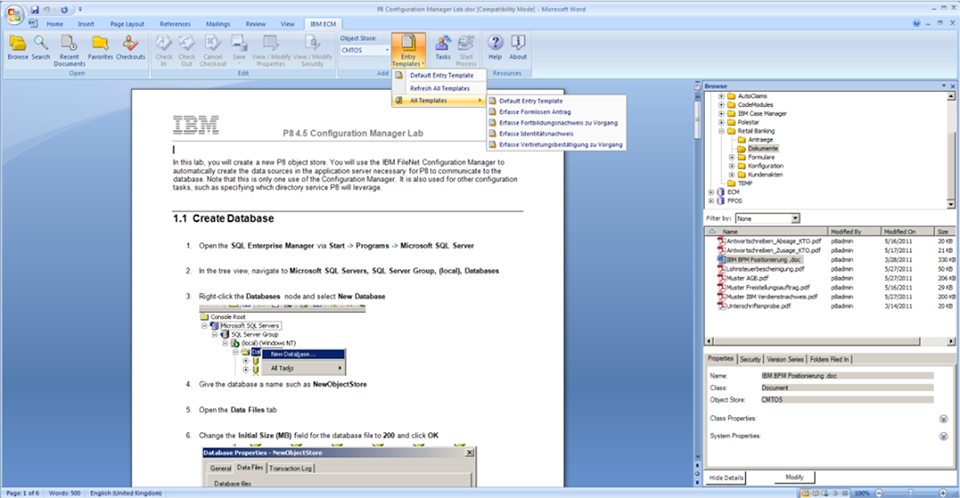
IBM FileNet Content Manager integrates seamlessly with Microsoft Office applications. Users can manage documents directly from within Word or Excel, using special commands and menu options to perform tasks such as adding documents and emails to the system, checking files in or out, and creating copies.
Expected Benefits
Simplify and Accelerate Application Development
Content managers and business users can use low‑code tools and modern GraphQL APIs to build secure, content‑centric enterprise applications, accelerating digital transformation.
Visual Management Saves Time
Through visual operation and management, users can quickly search across the enterprise’s digital content—including information from scanned paper documents. They can securely share critical business information from any device and within existing applications.
Increase Workforce Productivity
With AI deep learning technology, enterprises can automatically extract key content and insights from unstructured documents, reducing errors from manual classification and data entry, thereby maximizing productivity.
Improve and Optimize Customer Experience
Streamlining digital content management processes shortens data search and retrieval times. This accelerates workflows like customer data queries and payment confirmations, enabling timely delivery of required documents and data to provide an optimal service experience.
IBM Content Manager OnDemand
IBM CMOD is an enterprise digital content management solution that automatically ingests and stores large volumes of digital files, including XML datasets and e-reports. It supports viewing and managing critical business content across multiple browsers, offering fast search capabilities, automated optimization, and storage management to boost productivity and maximize value.
Market-Leading Enterprise Digital Content Management Solution
In today’s digital-first era, electronic data drives business automation and strategic decisions. Organizations generate massive volumes of digital orders, transaction reports, and financial records daily. Yet these critical assets often lack effective archiving, protection, sharing, and management—limiting their value and hindering compliance with external regulations and internal audits.
IBM Content Manager OnDemand (CMOD) is a market-leading enterprise digital asset management solution that efficiently archives, captures, and stores electronic data from diverse application systems. With enhanced security controls and access management, its intuitive, standardized interface enables users to quickly search, view, print, and share documents—ensuring effective utilization and governance of enterprise digital assets.
Key Features
Intuitive Built-in Document Retrieval Interface
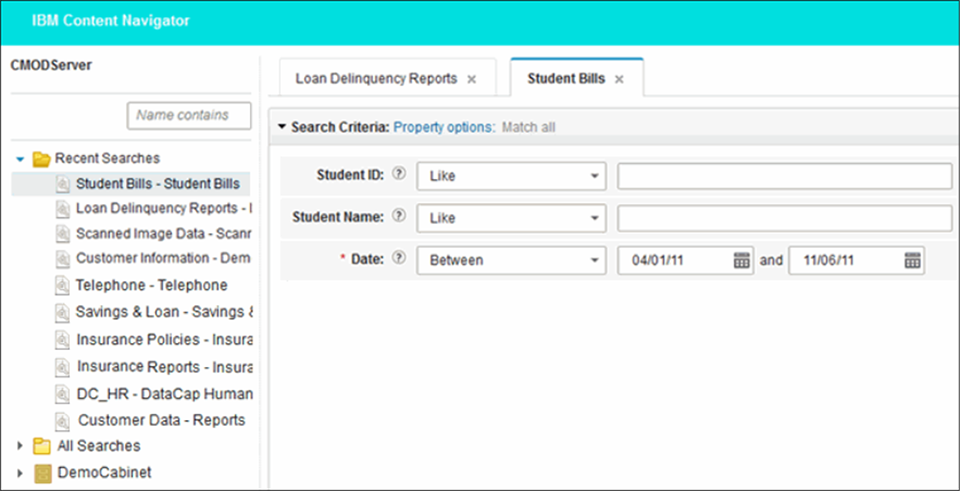
CMOD includes Content Navigator—a highly interactive, customizable, rapidly deployable web platform that simplifies digital content access. Users retrieve reports, view images, edit properties, add annotations, download, and print with just a few clicks. Rich configuration options and powerful APIs let enterprises extend the interface for enhanced user experiences.
Comprehensive Document Security Lifecycle Management
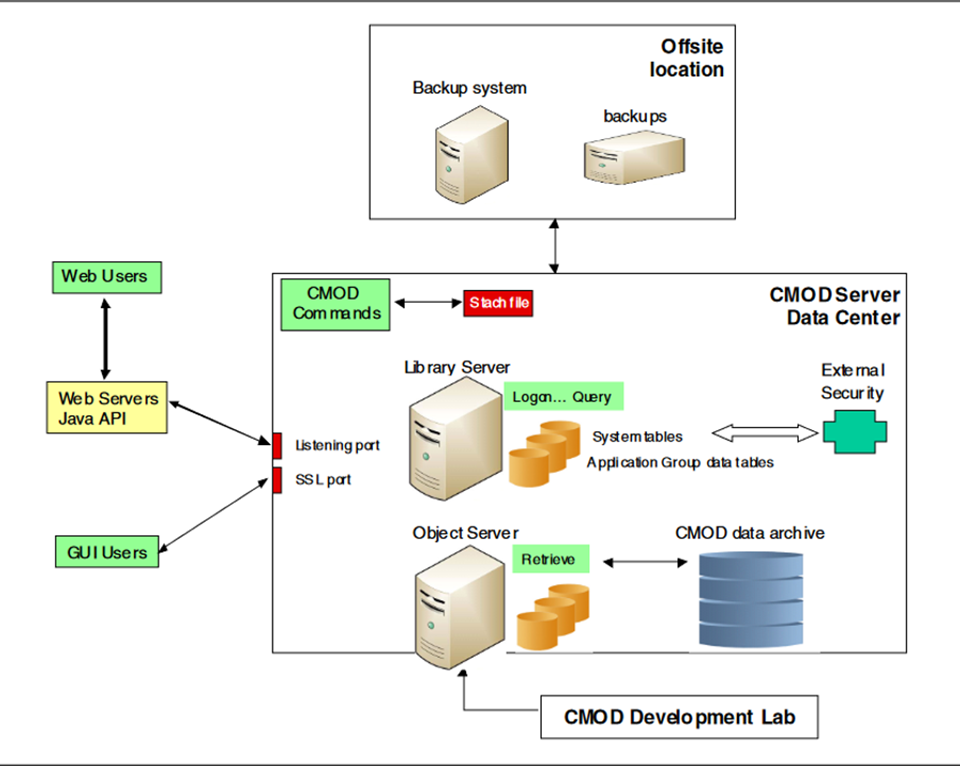
CMOD enforces rigorous security controls across the entire document lifecycle—from ingestion, storage, and indexing to access, usage, and sharing. Features include distributed archiving with access controls, user authentication with password policies, and encryption for data at rest and in transit—safeguarding physical, data, and personnel security to prevent reputational or financial damage from data breaches.
Highly Scalable Architecture for High Availability
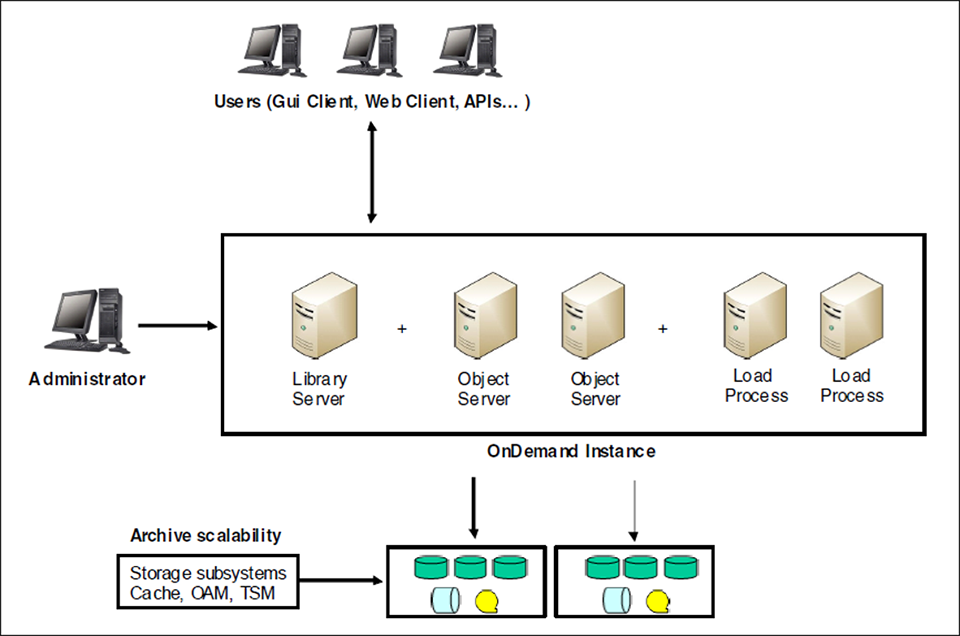
CMOD’s flexible architecture supports vertical scaling (adding server resources) or horizontal scaling (expanding to multiple servers) based on actual needs, delivering enhanced performance and availability. This flexibility enables easy configuration to accommodate diverse workloads and user demands.
Broad File Type Support for Storage & Retrieval
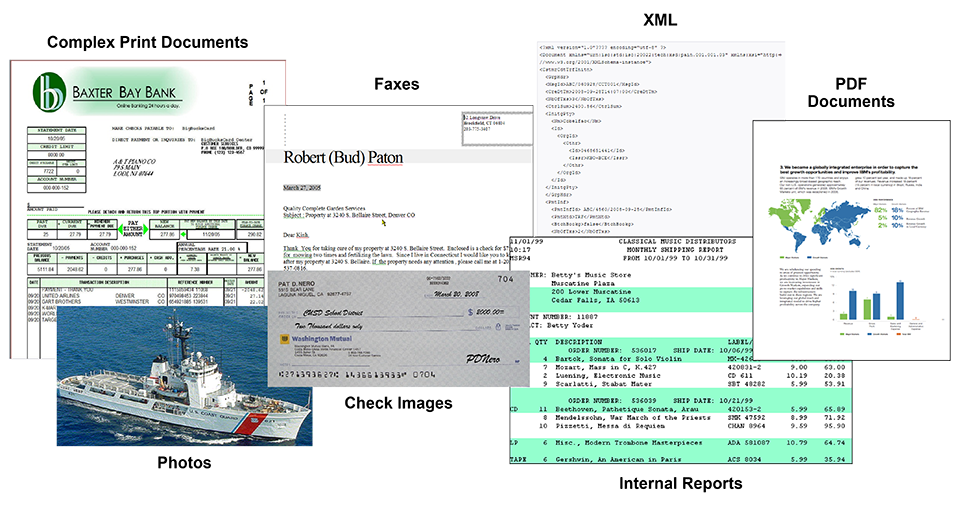
CMOD manages diverse text formats (PDF, XML, IBM mainframe AFP, Line, SCS) and scanned images (BMP, GIF, JPEG, PCX, PNG, TIFF). Its built-in universal indexer enables rapid retrieval via configured fields—such as scan date/content or user-defined attributes like date, author, and subject.
Expected Benefits
Cloud-Ready Digital Content Management
CMOD supports cloud services, enabling users to store reports, emails, and transaction records within a secure, unified cloud infrastructure. This reduces on-premises storage needs, lowers operational costs, accelerates time-to-market, and provides IT greater flexibility to meet evolving customer demands.
Enable Self-Service Document Access
CMOD provides a complete, secure, user-friendly shared environment for enterprise digital assets, allowing employees, customers, and partners to quickly access e-reports, bills, invoices, and more via self-service capabilities.
Deliver Exceptional Customer Service Experiences
With CMOD, frontline staff rapidly locate disputed bills or invoice details, retrieve high-fidelity content on-screen, navigate multi-page documents effortlessly, and respond to customer inquiries accurately and efficiently.
IBM Robotic Process Automation (RPA)
IBM Robotic Process Automation (RPA) is an AI-powered robotic process automation platform that builds, operates, and monitors cognitive-capable bots. It automates highly repetitive tasks, freeing workers for higher-value, cognitive work and accelerating digital transformation.
An AI‑driven, comprehensive robotic process automation solution.
An AI‑driven, comprehensive robotic process automation solution. The goal of business process automation is to simplify routine or repetitive workflows, freeing employees for more strategic, high‑value work—such as accelerating time‑to‑market for new products. Using robots to handle tedious, time‑consuming tasks also reduces human error, improves work efficiency, shortens response times, enhances data accuracy, optimizes service quality, and ultimately strengthens the customer experience.
IBM Robotic Process Automation (RPA) is an intelligent, AI‑infused robotic process automation solution. It supports unattended bots, attended bots, chatbot interfaces, optical character recognition (OCR), scheduling, and workload management. With its low‑code, single authoring environment, even non‑developers can select from hundreds of built‑in commands or use action‑recording to automatically generate automation scripts, accelerating time‑to‑value.
Key Features
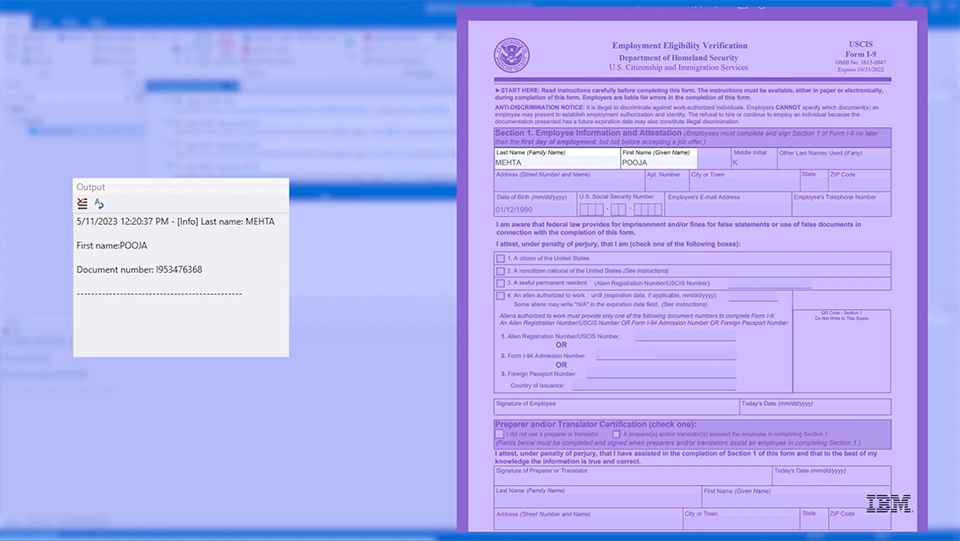
Easily Extract Text from PDFs with OCR Technology
IBM RPA includes built‑in optical character recognition (OCR) and natural language processing (NLP) capabilities. Users simply open a PDF in the RPA Studio designer, select the data range to extract, and the system automatically generates corresponding OCR commands—quickly converting image‑based PDF content into structured text data.
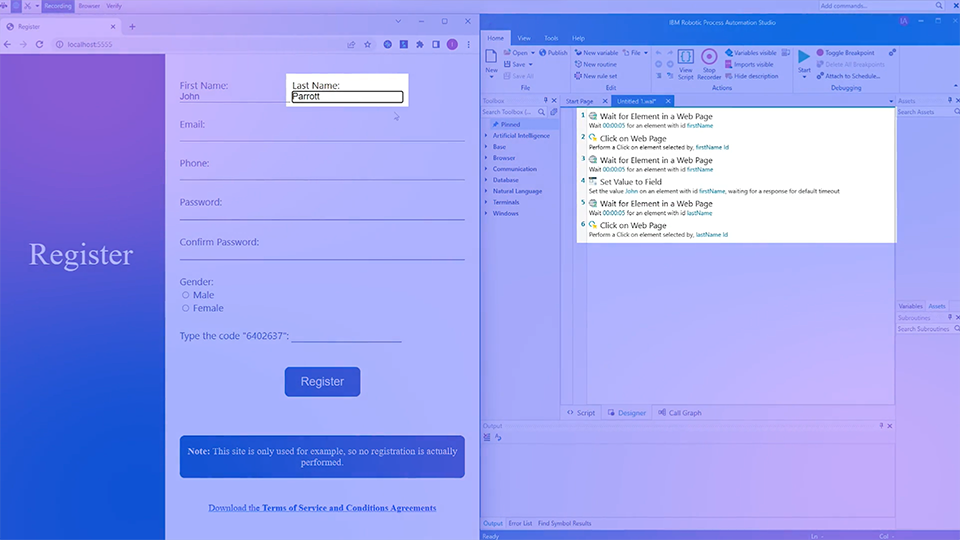
Low‑code Design Tools Speed Automation
The built‑in RPA Studio is a low‑code authoring environment. Users can intuitively drag and drop commands from the toolbox into the designer, or use screen recording to let the bot mimic actions and generate automation instructions. These instructions can then be designed into step‑by‑step workflows for quick automation testing.
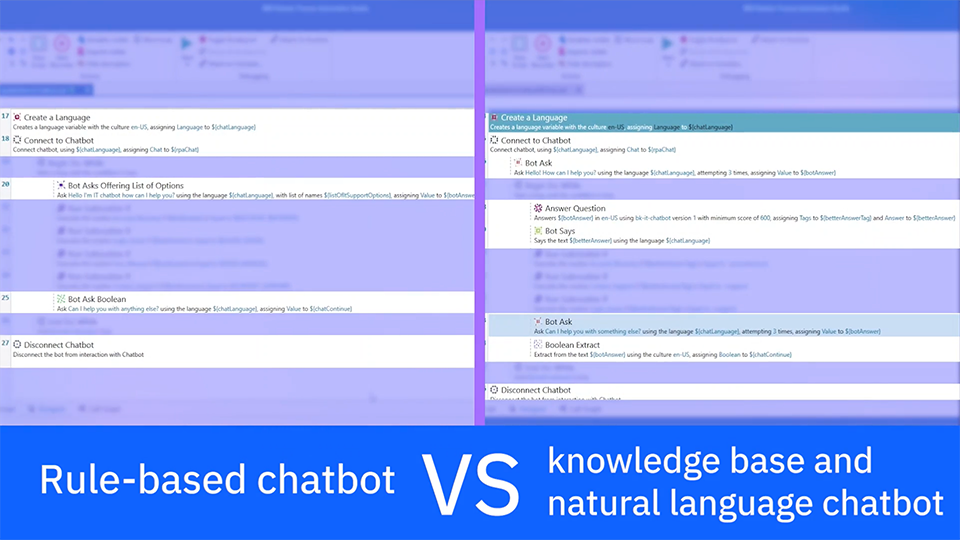
Build Chatbots Effortlessly with IBM RPA
The integrated RPA Control Center provides a chatbot interface that lets users create rule‑based or NLP‑powered chatbots in minutes. Using RPA commands, you can orchestrate dialogues between bots and humans, with the bot understanding conversation context to provide appropriate responses. The chatbot interface also integrates with various channels such as Web, Telegram, Microsoft Teams, Facebook, Slack, Twilio, and LINE.
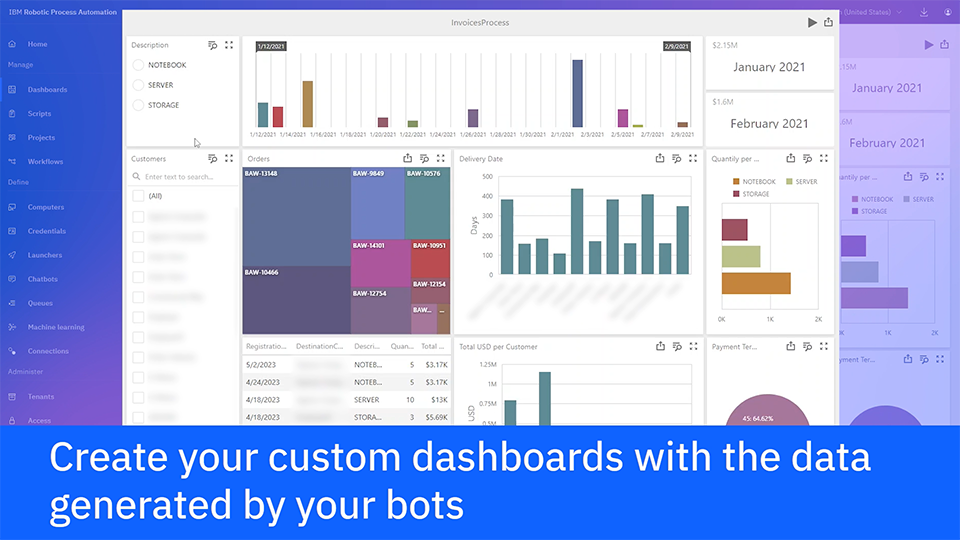
Enhance RPA Operations with Dashboards
IBM RPA includes dashboard and reporting capabilities. Pre‑built dashboards let IT operators monitor RPA environment performance and efficiency. Using the Dashboard Designer, users can also combine text, images, charts, tables, and filters to create customized dashboards. These analyze data collected by bots, delivering deeper operational insights for the business.
Expected Benefits
Reduce Human Error and Increase Productivity
By leveraging automated OCR capabilities, the solution significantly reduces errors from manual copy‑paste and repetitive data entry. This improves data and work quality, cuts losses and costs, and drives higher productivity for the enterprise.
Achieve Outstanding Return on Investment
According to a Forrester study, organizations implementing IBM RPA for process automation can achieve over 100% ROI. Additionally, businesses gain improved visibility into business processes, along with expected benefits in data and compliance.
User‑Friendly Interface Accelerates Value Realization
With IBM RPA’s low‑code design tools and AI‑assisted features, developers without software experience can quickly design automation workflows. New automation solutions can be built, tested, and deployed in hours, speeding the enterprise’s time‑to‑value for innovation.
Ready to Transform Your Enterprise?
Contact our team to explore IBM software trials, Enterprise platform demos, or a full digital transformation roadmap.